







IB Programmes: IB PYP, MYP and DP planners, criteria and reporting

+$1.48/mo at 500 students. Free instant access, no credit card required.

Works with
  • Academics
IB Programmes in the EduPrime: IB PYP, MYP and DP planners, criteria and reporting
01

The unit of inquiry, written down properly

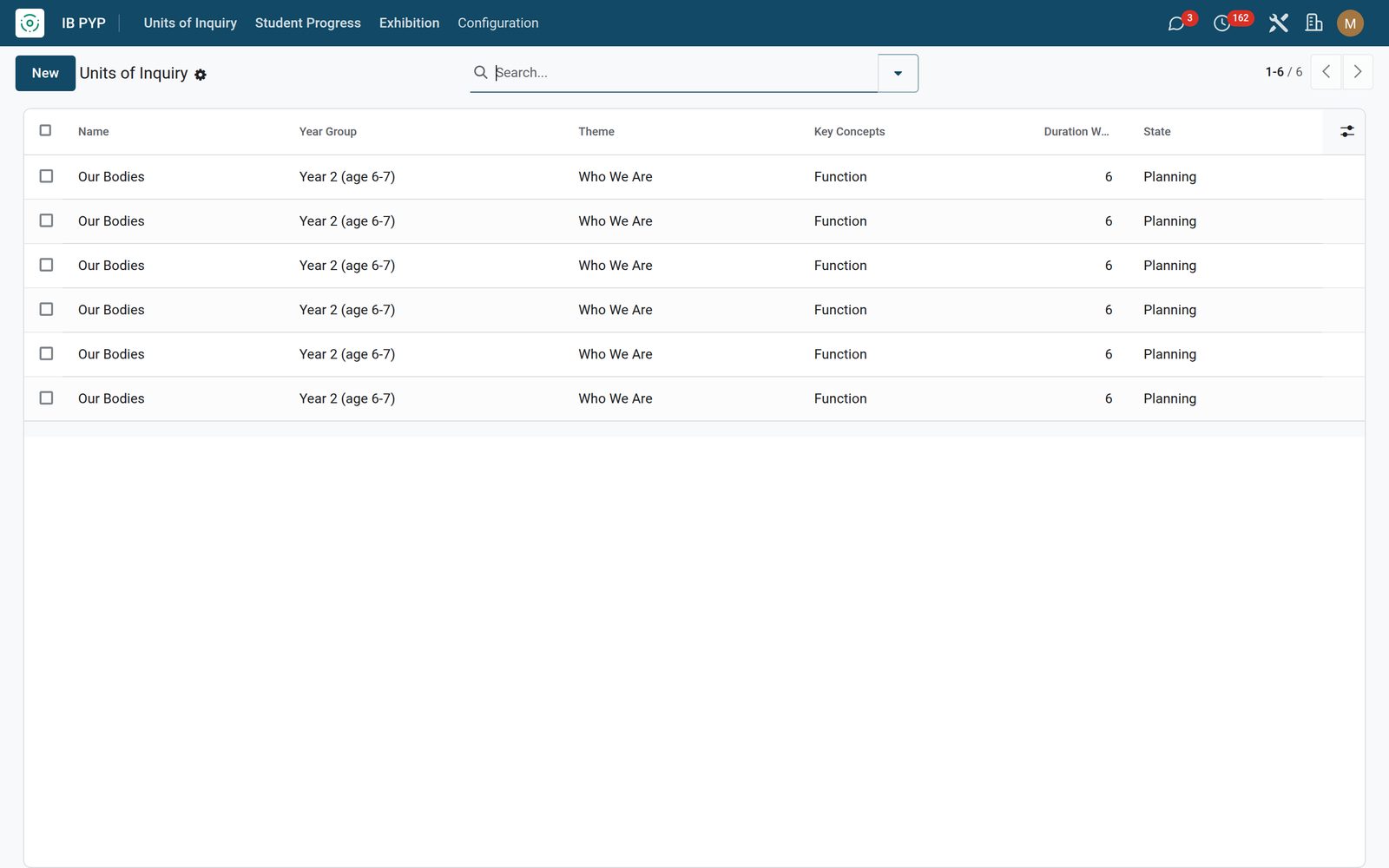
Each unit carries its central idea, its lines of inquiry and the teacher and student questions that drive it, set under one of the six transdisciplinary themes. The programme of inquiry is the document the PYP is judged on, and it is usually a wall chart photographed once a year; here it is a set of records you can filter, report on and carry forward.
IB Programmes: The unit of inquiry, written down properly
02

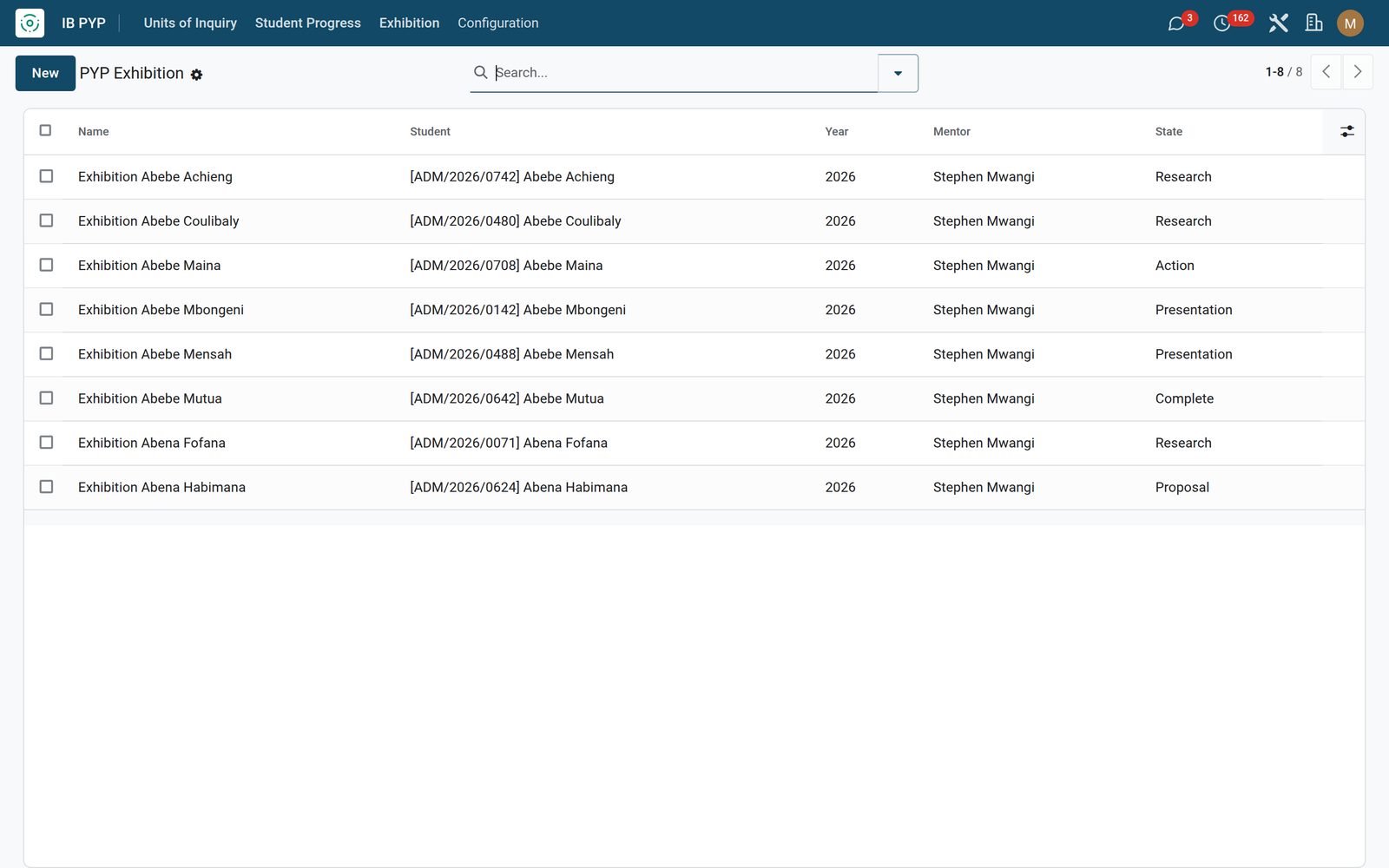
The exhibition, with the action attached

Mentor, inquiry and the action taken — the exhibition is where the PYP asks students to do something about what they have learned, and the action is the part that gets lost. It is a field on the record, against the child who took it.

IB Programmes: The exhibition, with the action attached
03

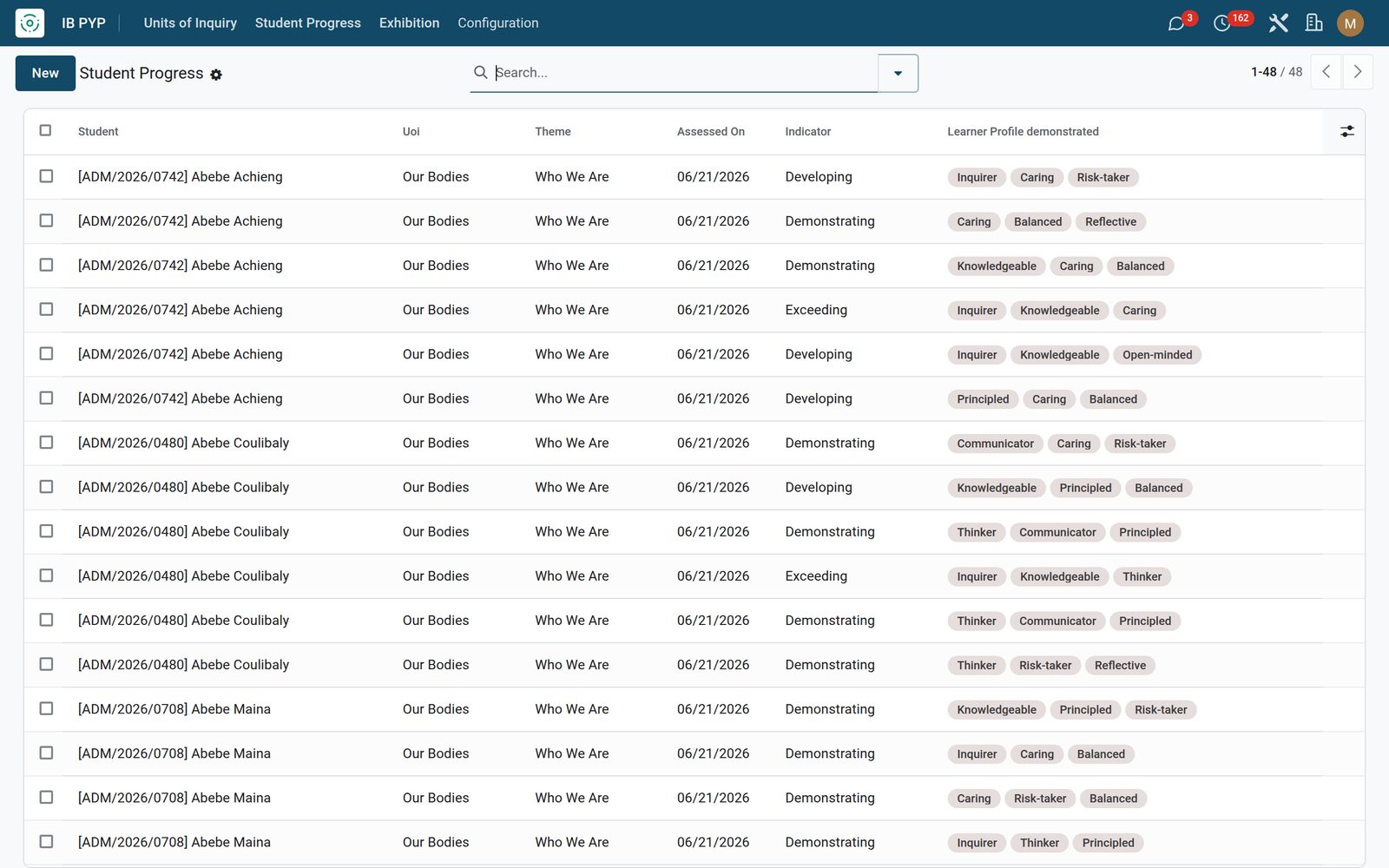
Progress across the programme, not just the unit

Student progress is tracked against each unit of inquiry and rolled up across all six themes, so a coordinator can see which themes a cohort has genuinely covered and which have been squeezed — the question that decides next year’s programme of inquiry.

IB Programmes: Progress across the programme, not just the unit
04

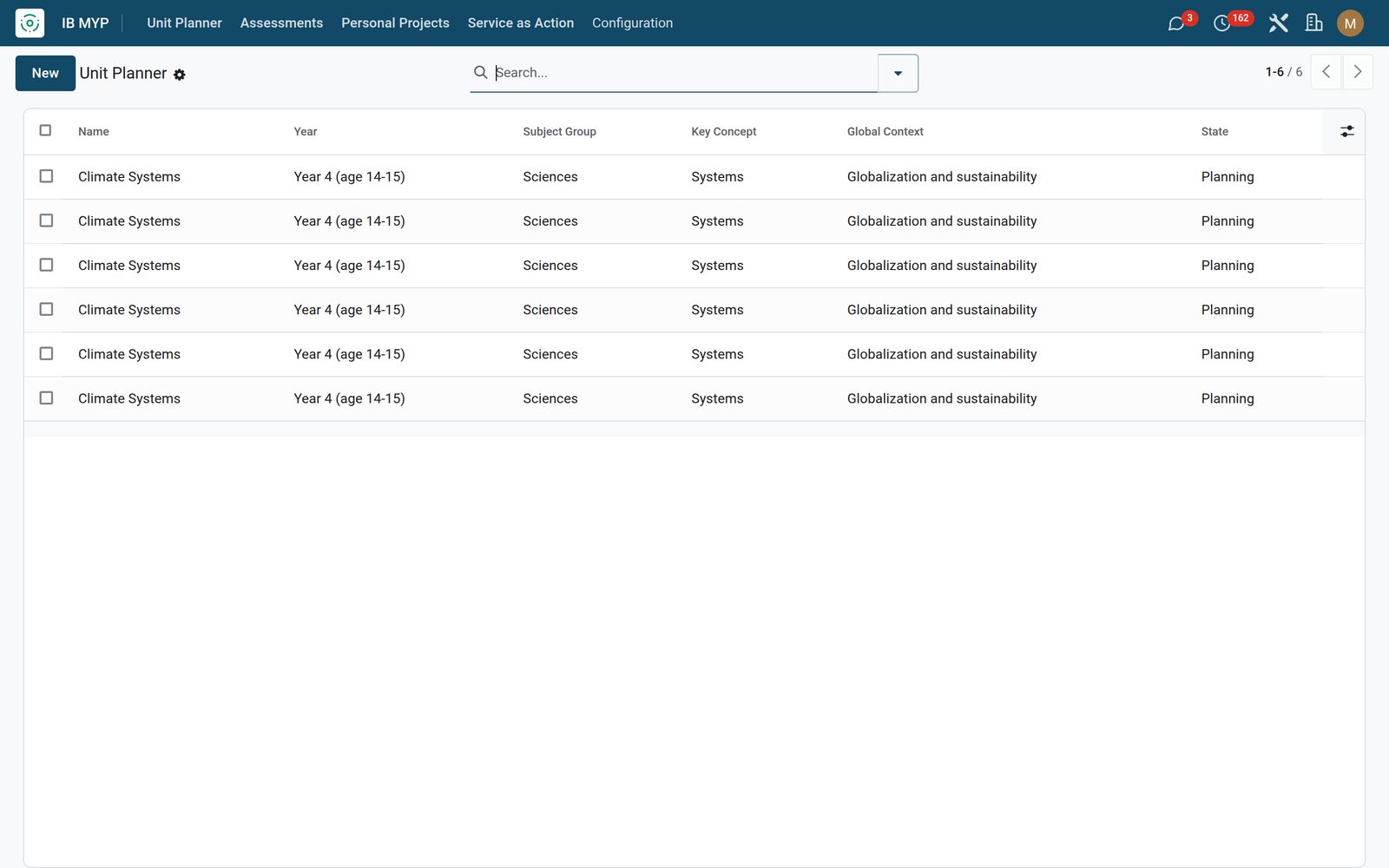
The unit planner, as a record

The statement of inquiry, the key concept and related concepts, the global context, and the factual, conceptual and debatable inquiry questions. The MYP unit planner is a real document with a real shape, and it usually lives in a word processor where it cannot be searched, reported on or reused. Here it is a record, alongside the class that is studying it.

IB Programmes: The unit planner, as a record
05

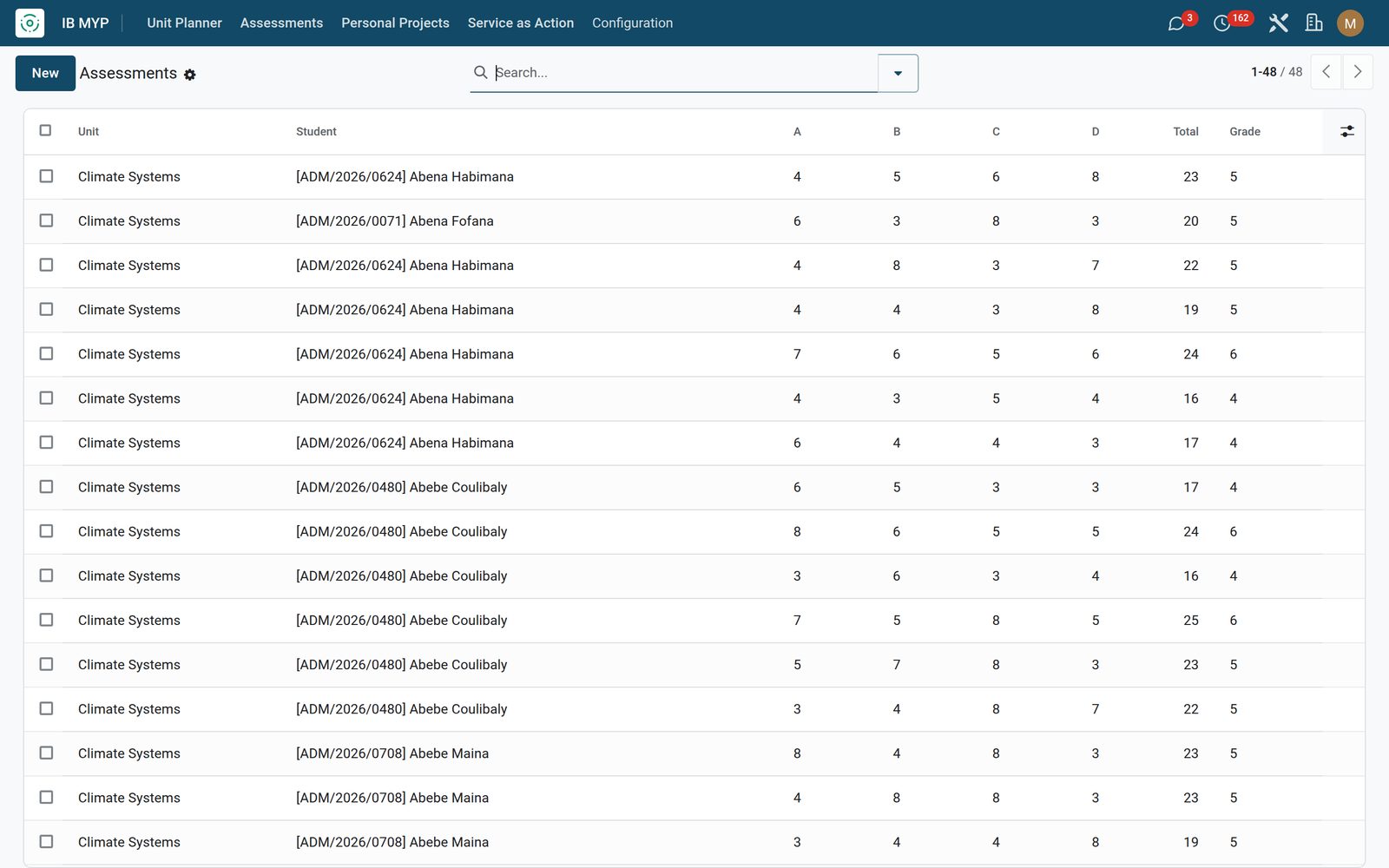
Criteria A to D, with achievement levels

Assessment is recorded as an achievement level against a criterion, with the descriptor that justified it — not a percentage converted into a level afterwards. The criteria belong to the subject group, the levels belong to the task, and the report reads from both. Across all eight subject groups the vocabulary stays the same.

IB Programmes: Criteria A to D, with achievement levels
06

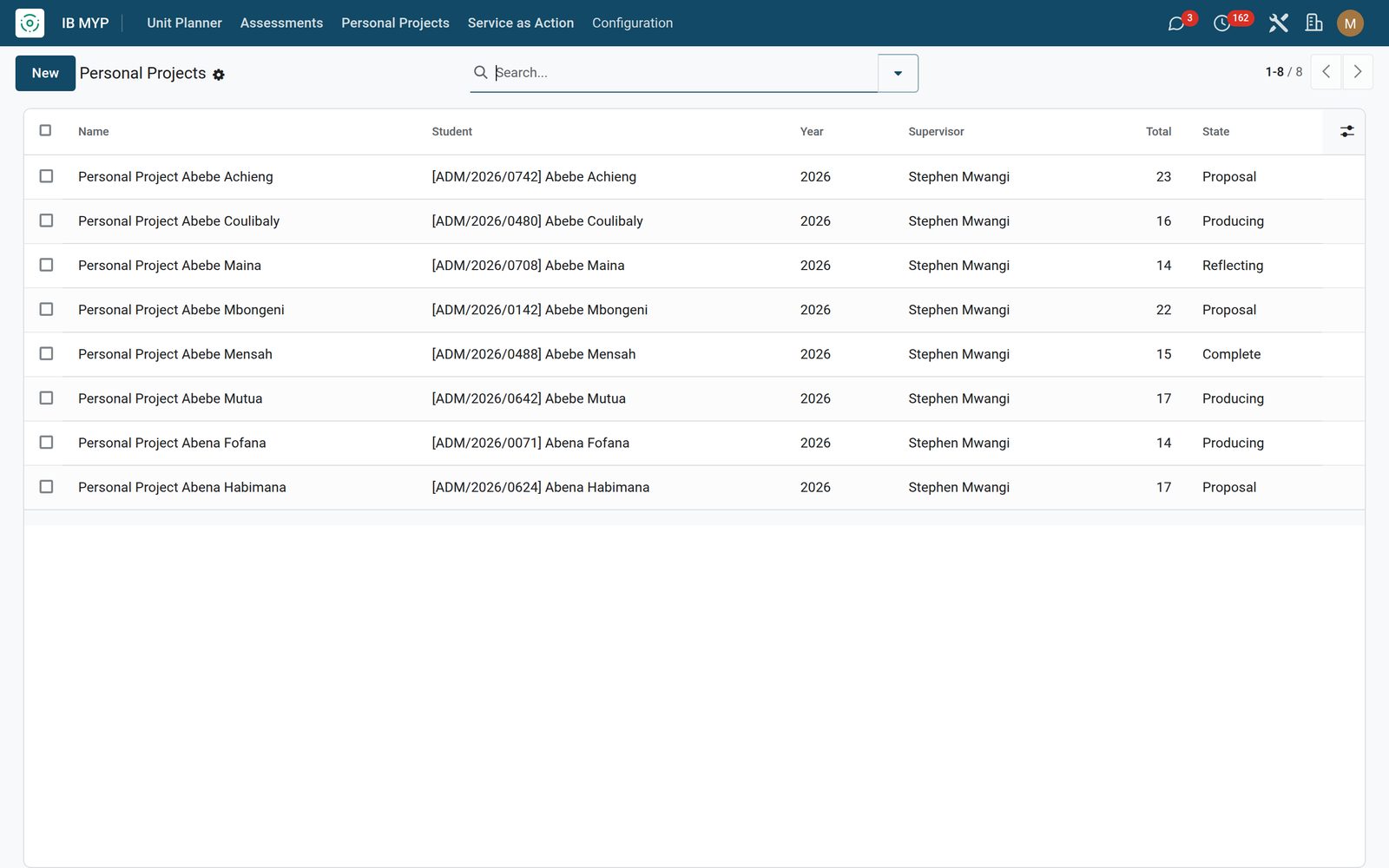
The personal project, supervised and evidenced

Supervisor, process journal, product and report, assessed on the MYP criteria. The personal project is the culmination of the programme and the thing most likely to be tracked in a separate spreadsheet by one overworked coordinator; here it sits on the student record with everything else.

IB Programmes: The personal project, supervised and evidenced
07

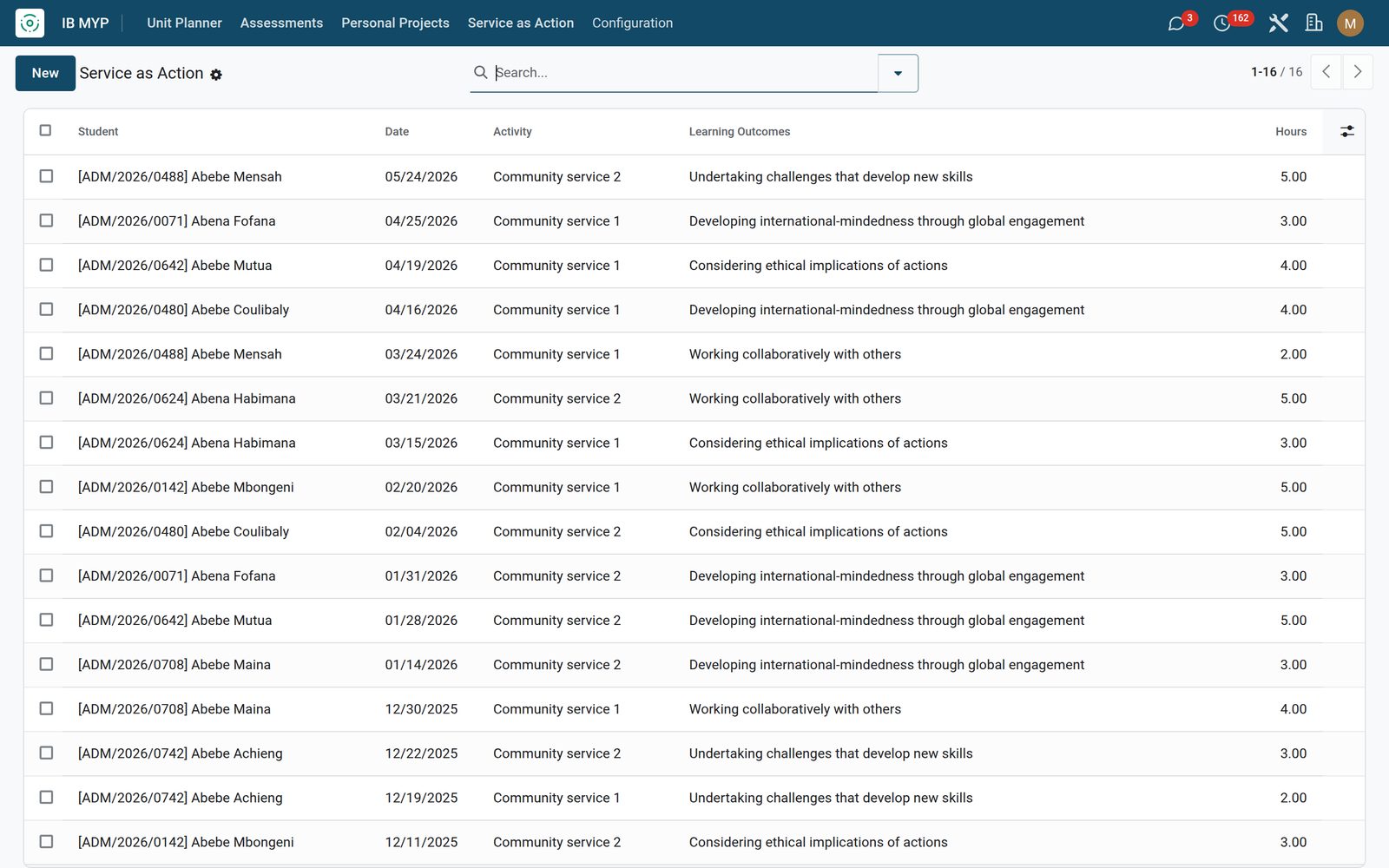
Service as action, tied to a context

Service records the learning outcomes it evidences and the global context it belongs to, so service is part of the programme rather than an activity log kept beside it. What the student did, what it was meant to develop, and who confirmed it.

IB Programmes: Service as action, tied to a context
08

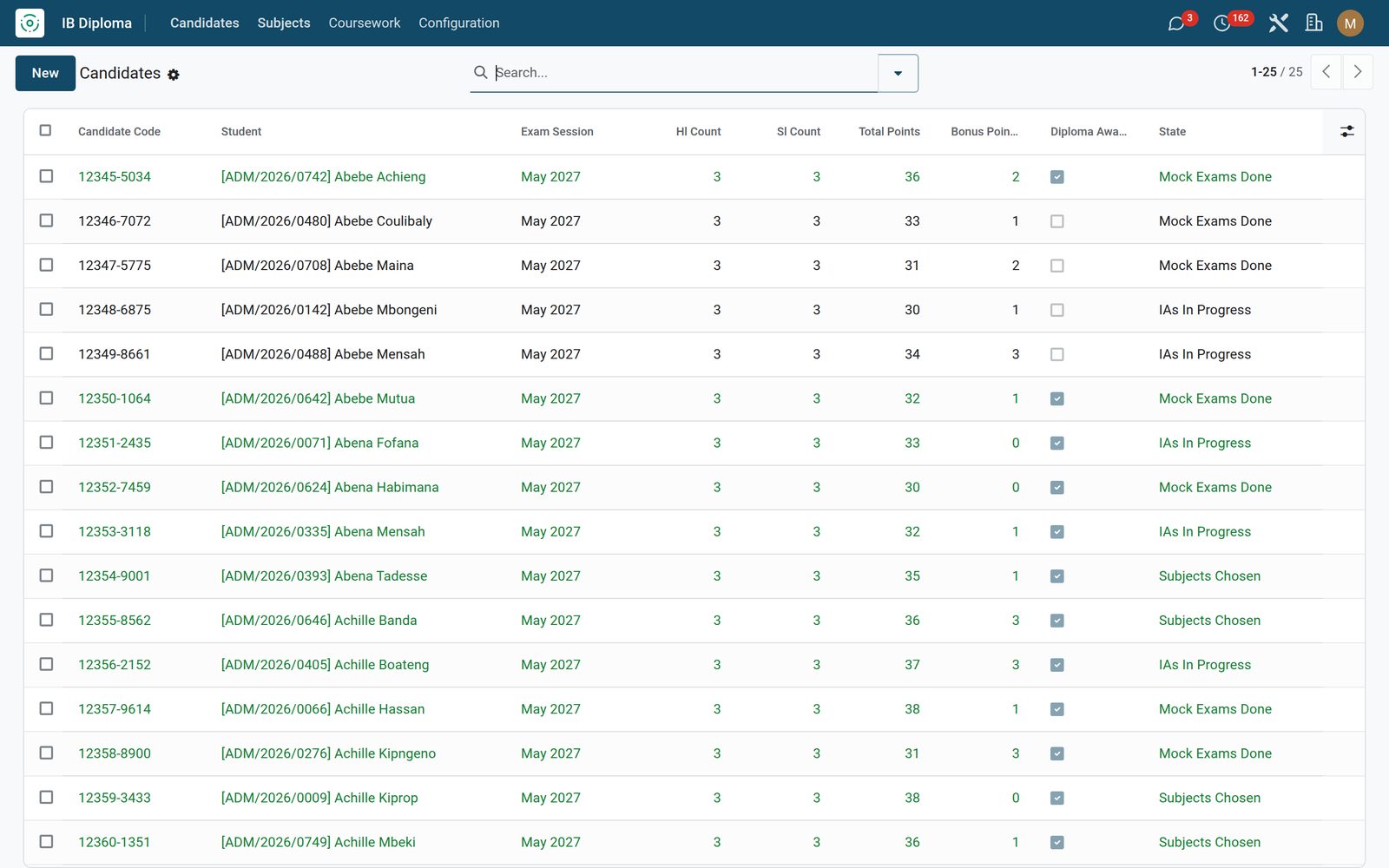
Candidate registration, in one place

Each candidate carries their candidate number, their exam session and their six subjects at higher or standard level. Registration is where the coordinator’s year begins and where most of the errors hide — a wrong level, a missing subject, a candidate registered for a session they are not sitting. Here it is one record per candidate, and everything downstream reads from it.

IB Programmes: Candidate registration, in one place
09

Internal assessment and the moderation sample

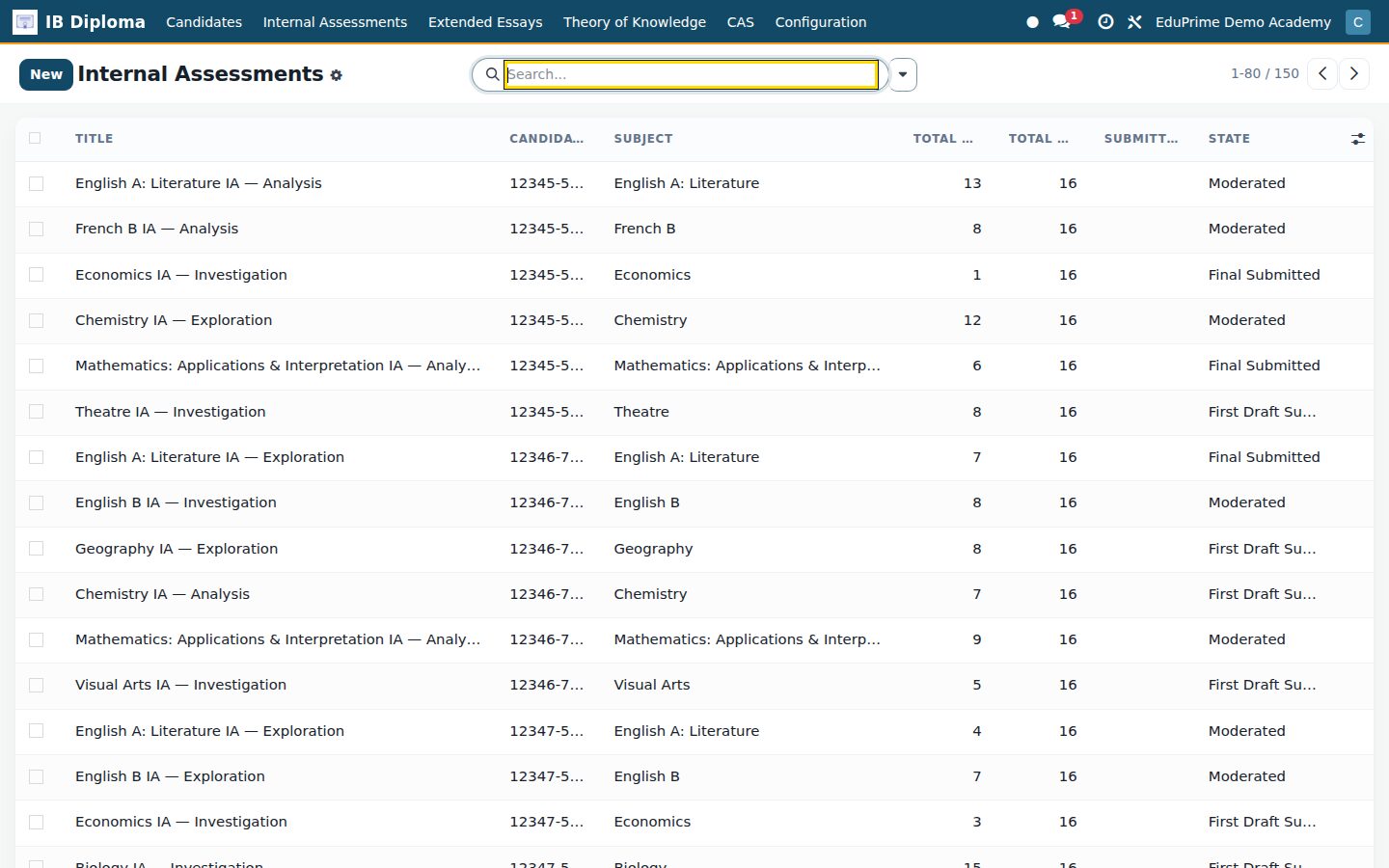
IA is tracked per candidate per subject, with the criteria, the marks and the deadline. The moderation sample is the part that bites in February: this keeps the marks together with the candidates they belong to, so choosing and despatching a sample is reading a list rather than reconstructing one from teachers’ spreadsheets.

IB Programmes: Internal assessment and the moderation sample
10

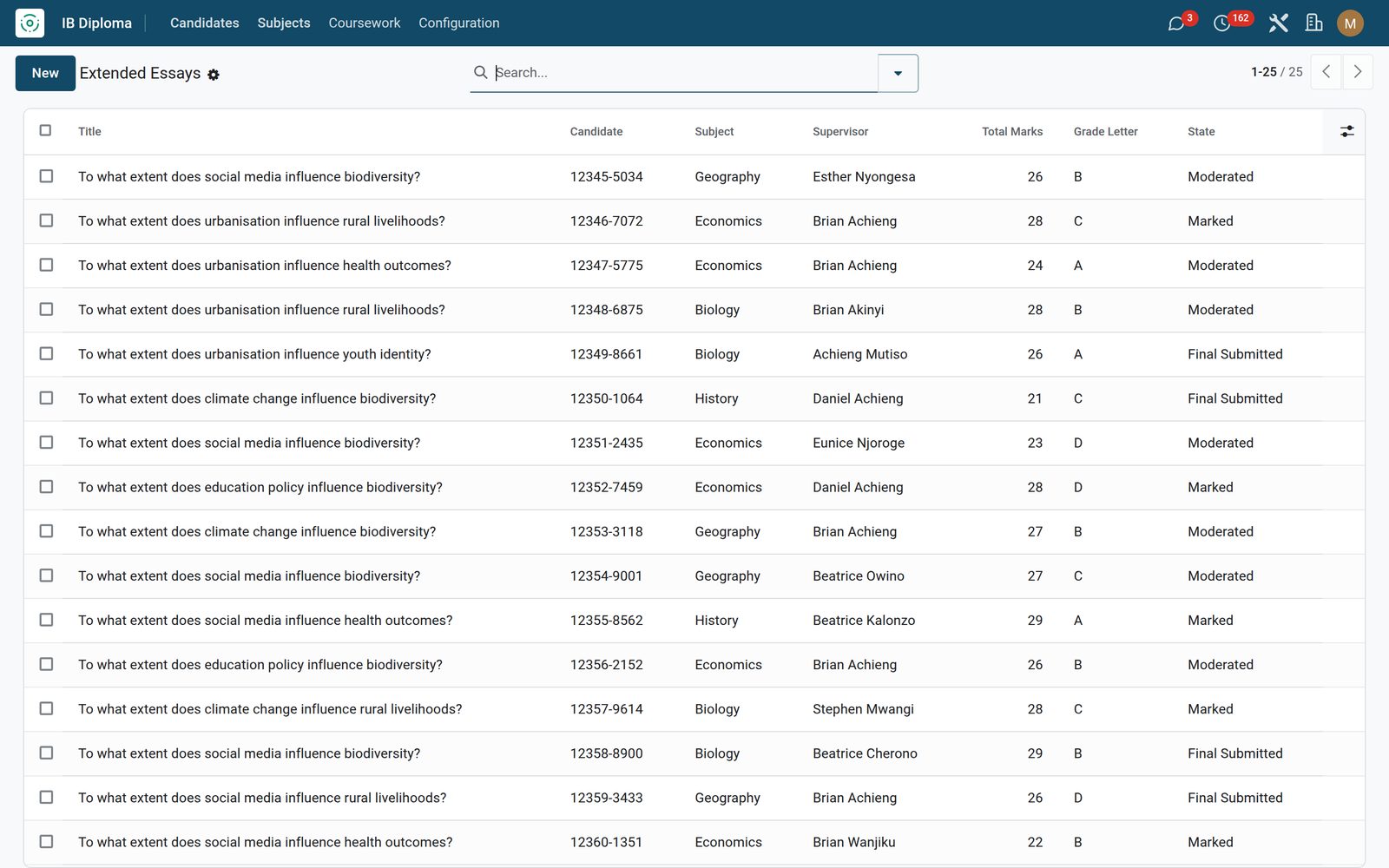
The Extended Essay, from question to grade

The research question, the supervisor, the subject it is registered in, the reflection sessions and the final grade on the DP scale. Reflection sessions are a formal requirement and the first thing to go unrecorded — they are fields here, on the record, alongside the question the candidate actually ended up writing about.

IB Programmes: The Extended Essay, from question to grade
11

Theory of Knowledge, both halves

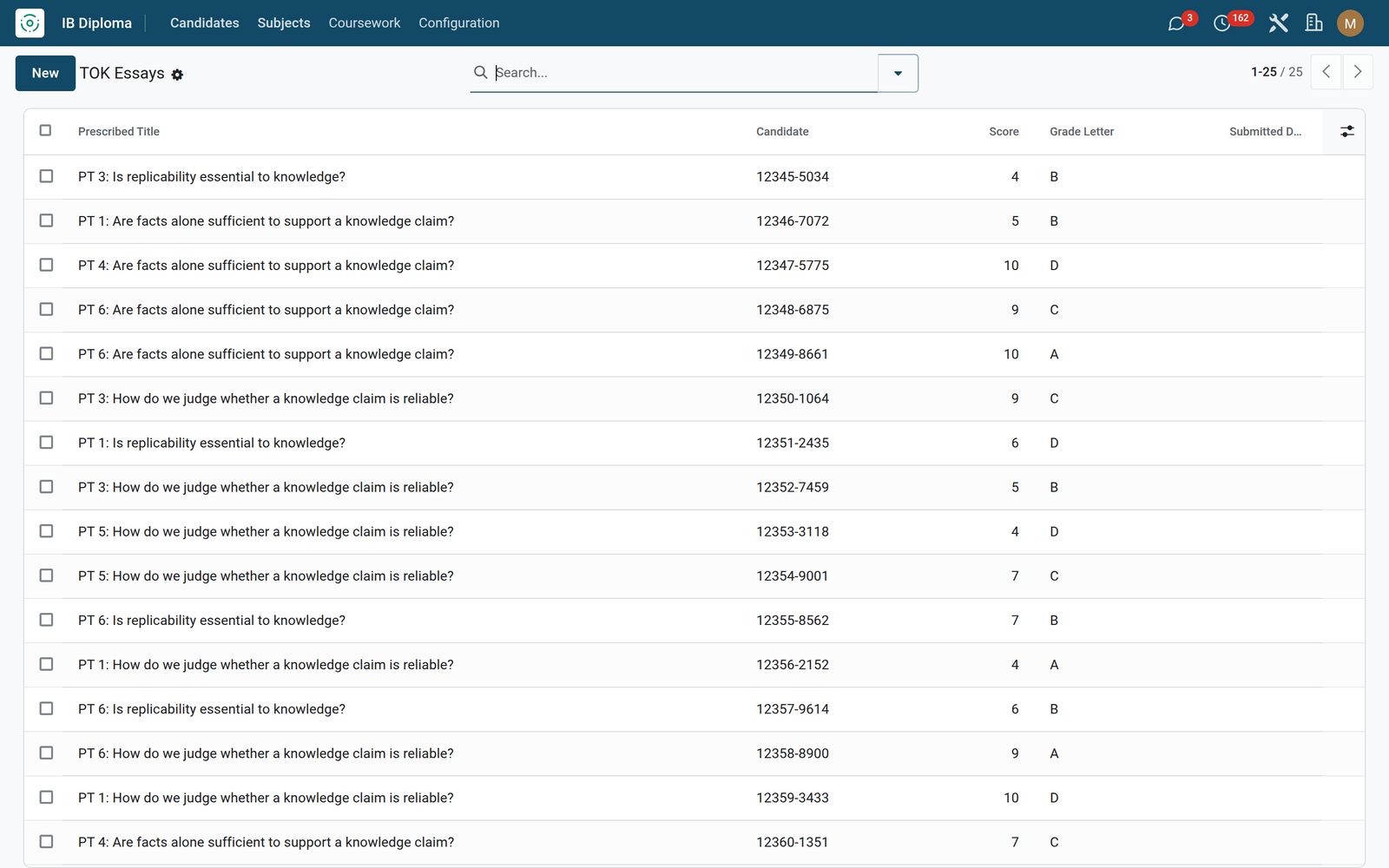
The prescribed-title essay and the exhibition are separate records because they are separately assessed. The essay carries its title and its grade; the exhibition carries its objects and its commentary. Together with the EE they produce the core points that decide whether a candidate reaches the Diploma.

IB Programmes: Theory of Knowledge, both halves

What's inside

Everything in IB Programmes

28 items in 8 areas, every one shipping with the app today.

  • IB Diploma

    • Candidates
    • Internal Assessments
    • Extended Essays
    • CAS
  • Configuration

    • Subjects
    • Curriculum Groups
    • Exam Sessions
    • Settings
  • Theory of Knowledge

    • TOK Essays
    • TOK Exhibitions
  • IB Continuum

    • Unit Planner
    • Subject Groups
    • Assessments
    • Global Contexts
    • Personal Projects
    • ATL Skills
    • Service as Action
    • Settings
  • Documents it prints

    • MYP Achievement Report
  • Roles it ships

    • MYP Officer
    • MYP Manager
    • Feature: MYP Personal Project
    • Feature: MYP Service as Action
  • Guided assistants

    • EduPrime Adaptive Institution Settings
  • More in this app

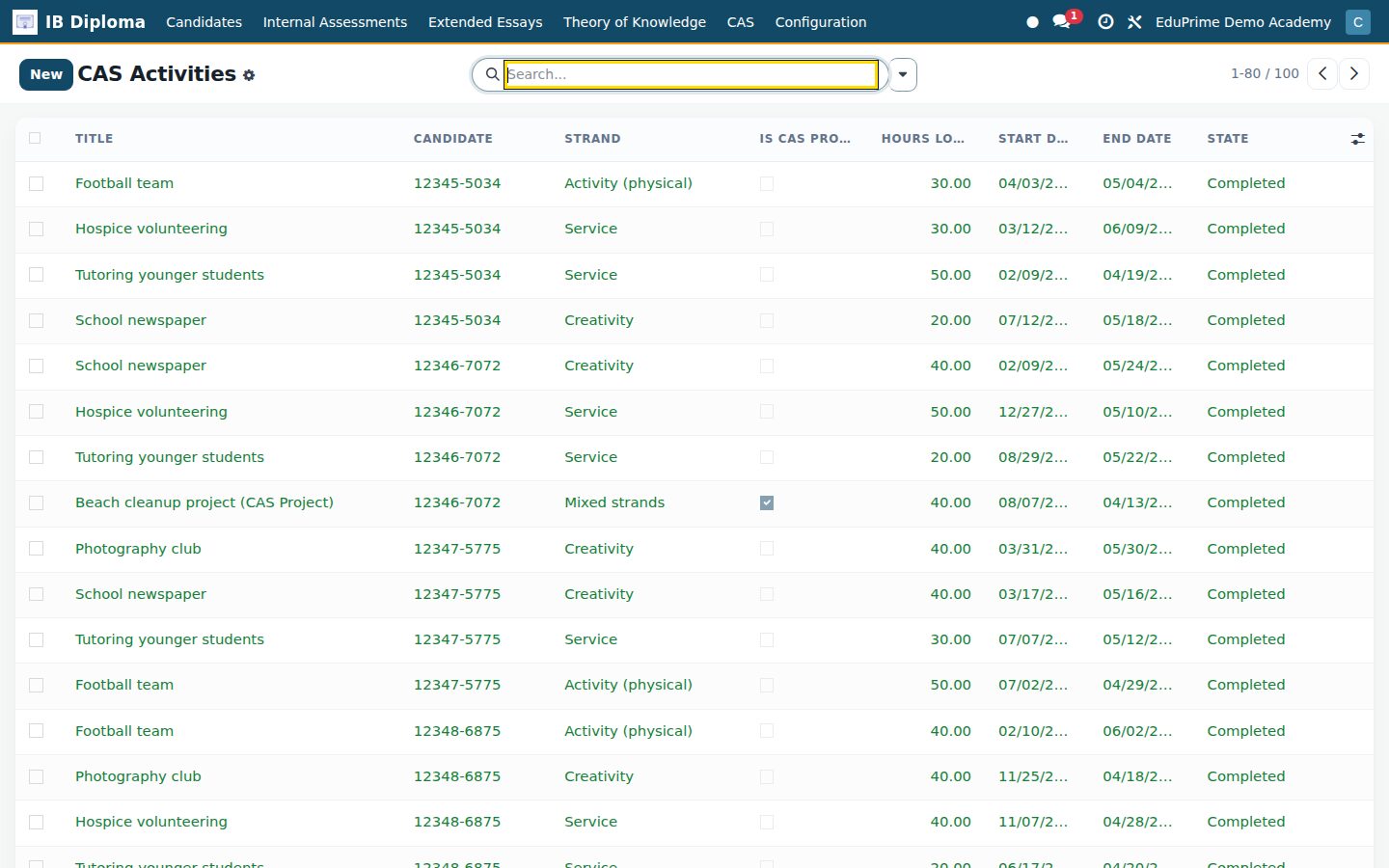
    • CAS as evidence, not as hoursEach CAS activity records which of creativity, activity and service it belongs to, the learning outcomes it evidences and the supervisor who signed it off. The IB stopped counting hours a long time ago; this follows the requirement as it is now, so a candidate’s CAS portfolio is a set of evidenced outcomes rather than a total.
    • The learner profile, evidencedThe ten attributes are recorded per child with the evidence that supports them, and the ATL skills sit alongside. A report that says a child is principled because someone ticked a box is worth nothing; this keeps what was observed.
    • Approaches to learning, planned inThe five ATL skill clusters are recorded as things that are taught and assessed, and they are planned into the unit rather than claimed afterwards. When a coordinator is asked which units develop research skills, the answer is a filter.
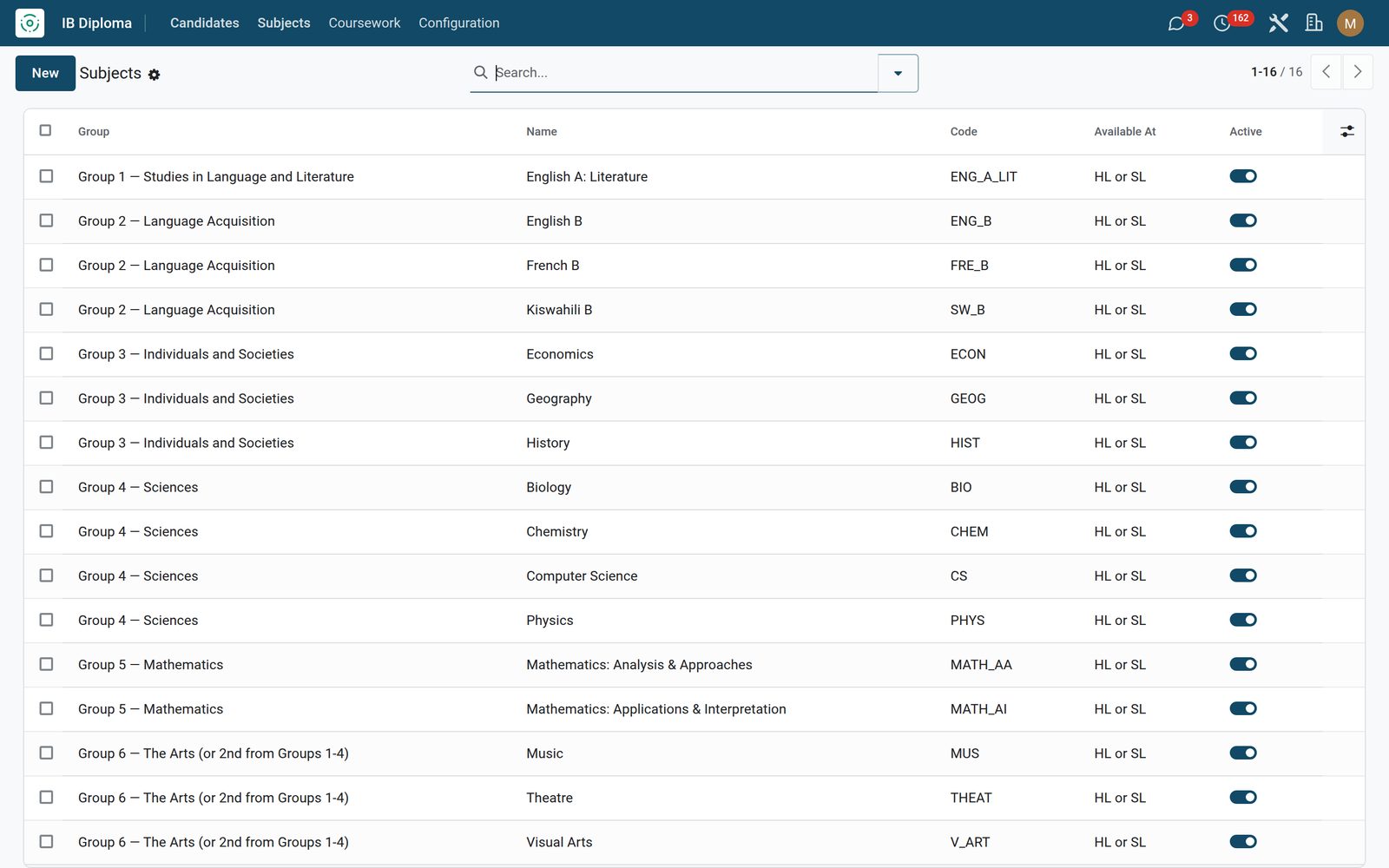
    • Sessions, groups and the shape of the programmeExam sessions and curriculum groups define what a candidate may register for. Subjects sit in their groups at the levels your school actually offers, so registration cannot quietly produce a combination the IB would not accept.

Put IB Programmes to work

Add it to your EduPrime plan, priced per student, or start a free trial and see it running first.