









01
The return, defined once
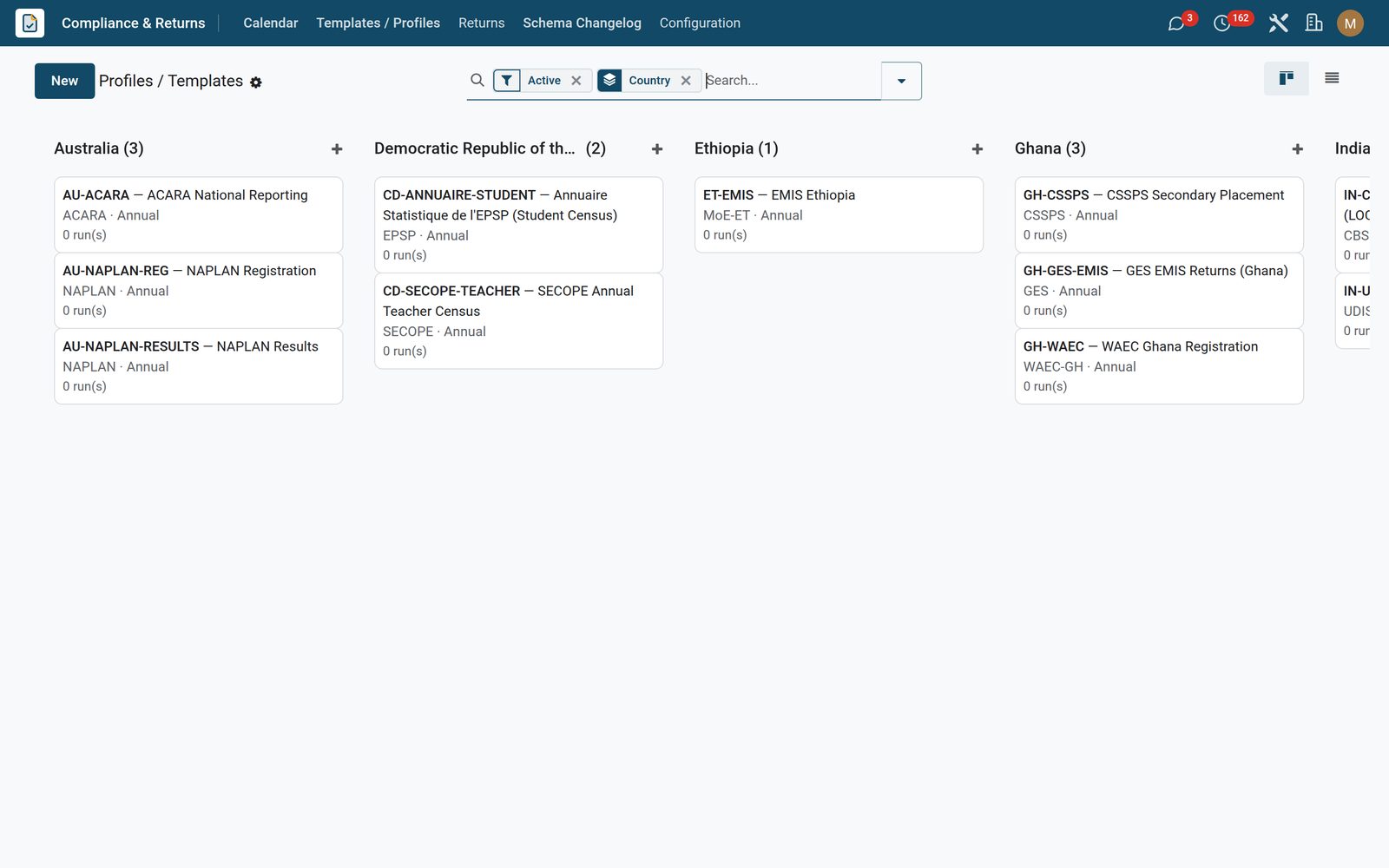
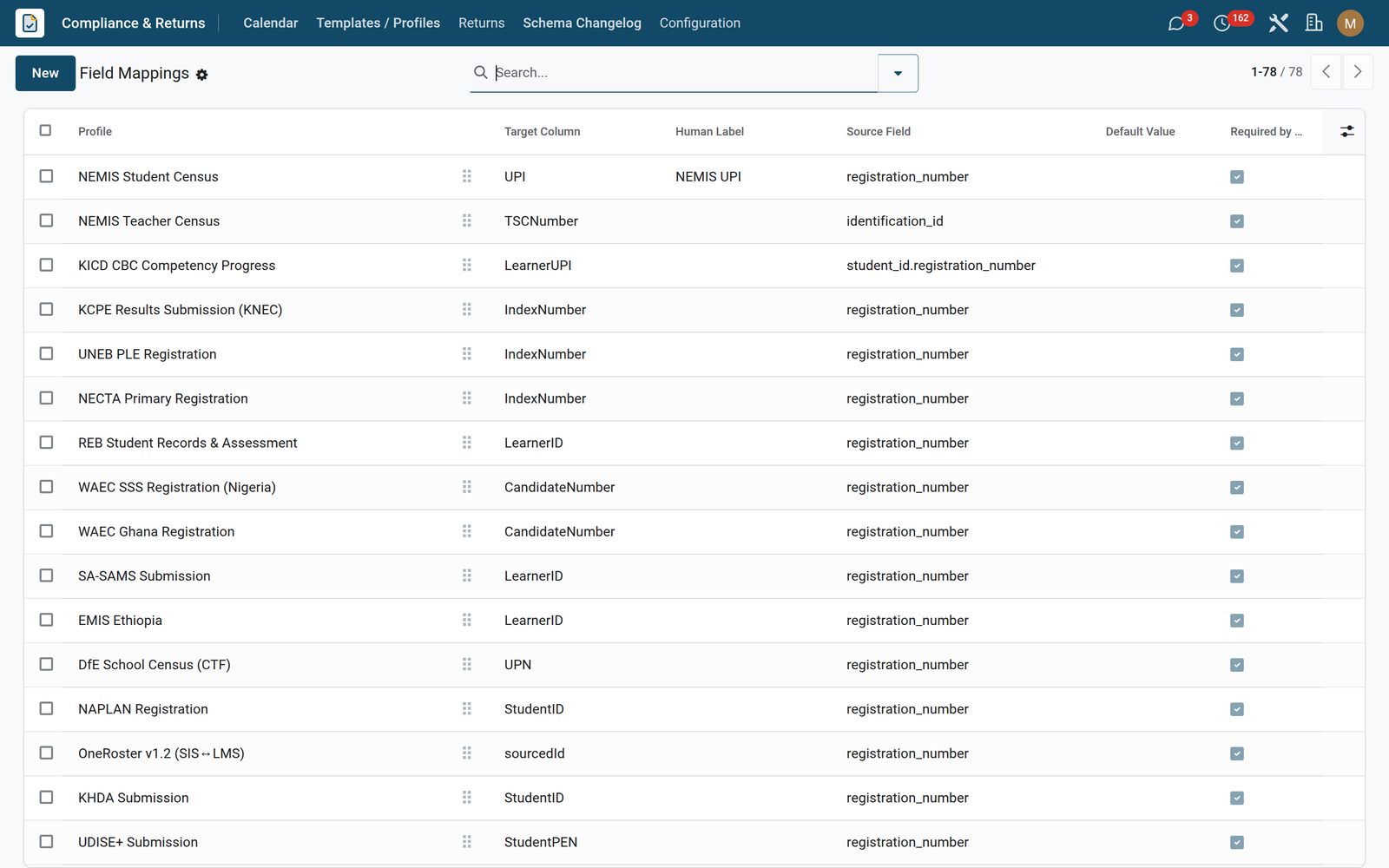
A profile per return: which fields it wants, where each comes from in your data, and what format the ministry accepts. Defining it is the only hard part, and it is done once rather than every submission window.
 Compliance & Returns: Statutory exports for KEMIS, NEMIS, UNEB, WAEC and other regulators
+$1.48/mo at 500 students. Free instant access, no credit card required.
 EduPrime Core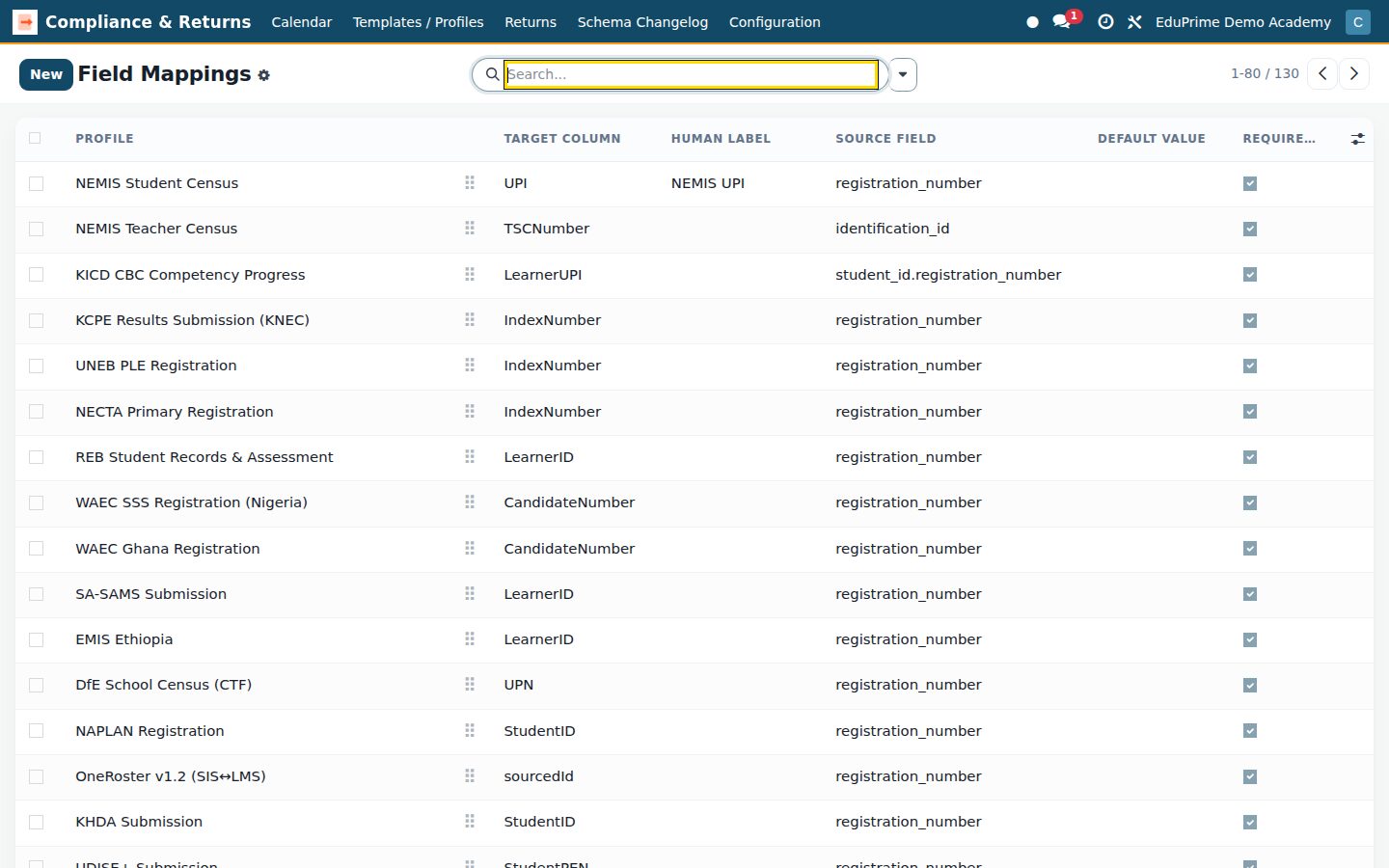
A profile per return: which fields it wants, where each comes from in your data, and what format the ministry accepts. Defining it is the only hard part, and it is done once rather than every submission window.
Kenya’s KICD CBC competency progress and NEMIS. Nigeria’s JAMB, WAEC, NECO and UBEC. South Africa’s NSC matric submission and SA-SAMS. Uganda’s EMIS and UNEB, Tanzania’s NECTA, Rwanda’s NESA, Ghana’s CSSPS, Ethiopia’s EMIS, the UK’s DfE census and CIPFA, Australia’s NAPLAN, the USA’s Ed-Fi and OneRoster, India’s UDISE+ and CBSE. Real returns, already described.
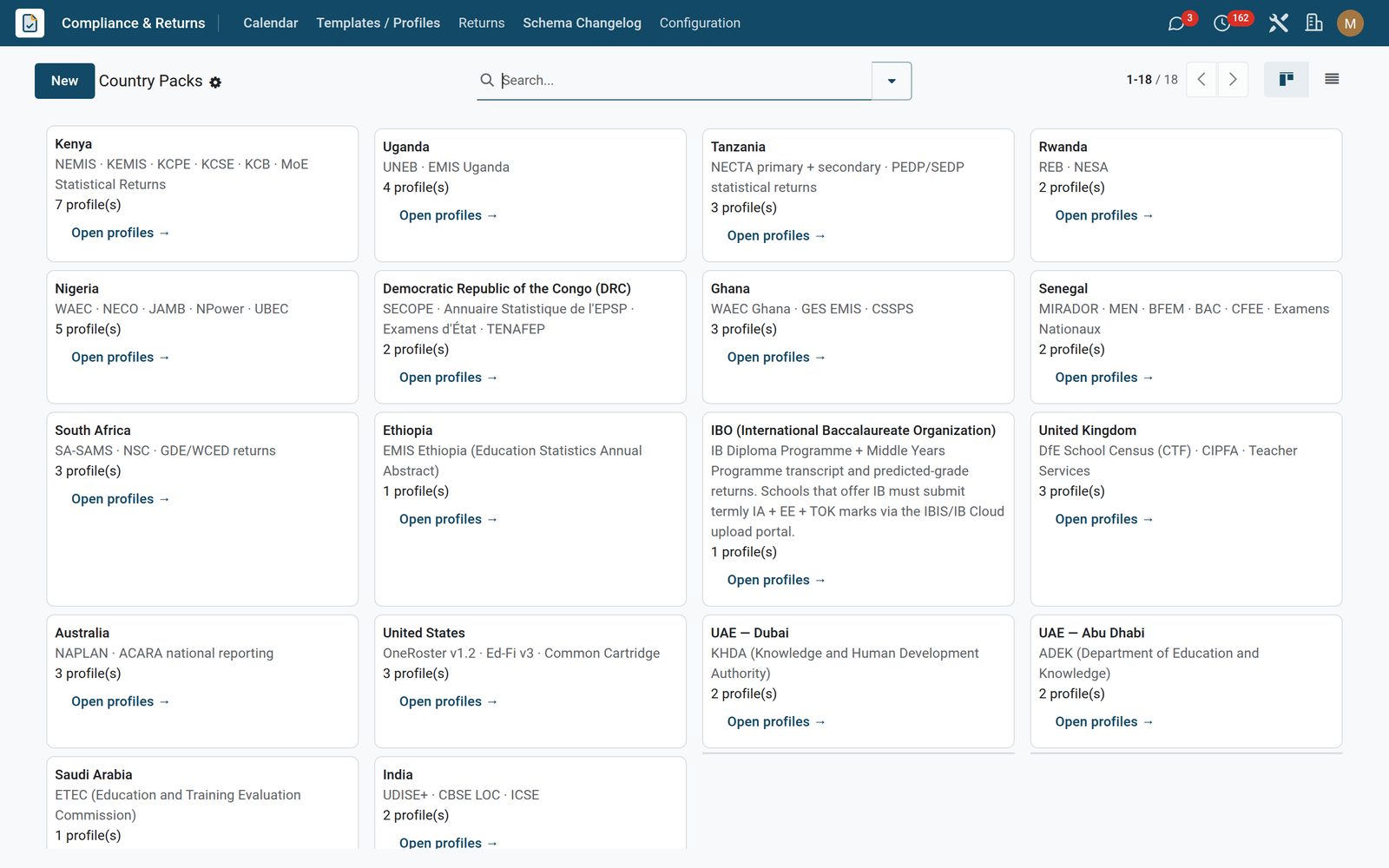
The field map is the heart of it. A ministry wants LEARNER_SURNAME; you hold the pupil’s surname. Map it once and every future return in that pack is correct by construction.
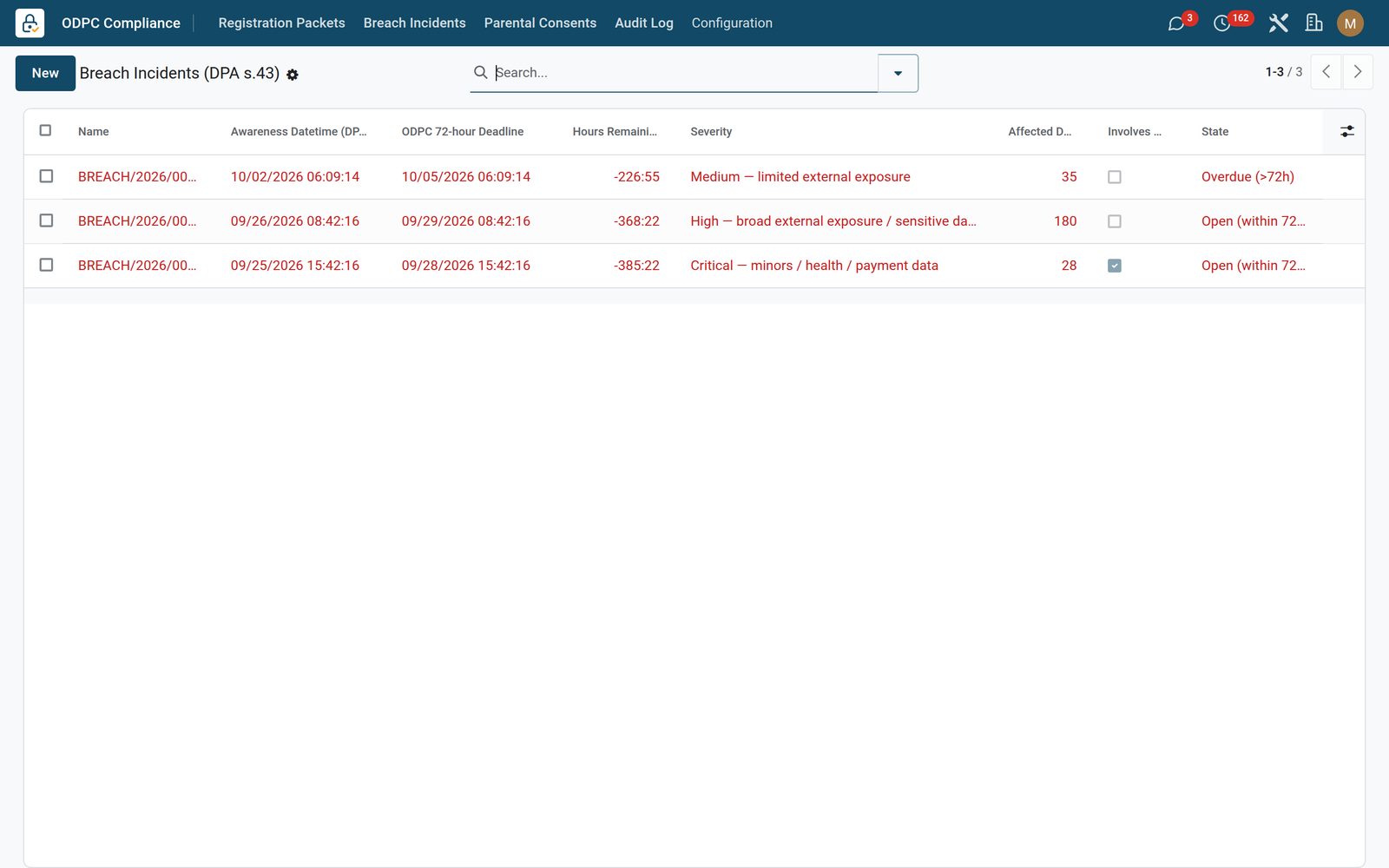
Section 43 gives 72 hours. The record carries severity, the pupils affected, what was done and whether the Commissioner and the parents were told. The value is in having somewhere to write it down at the moment it happens, at 4pm on a Friday.
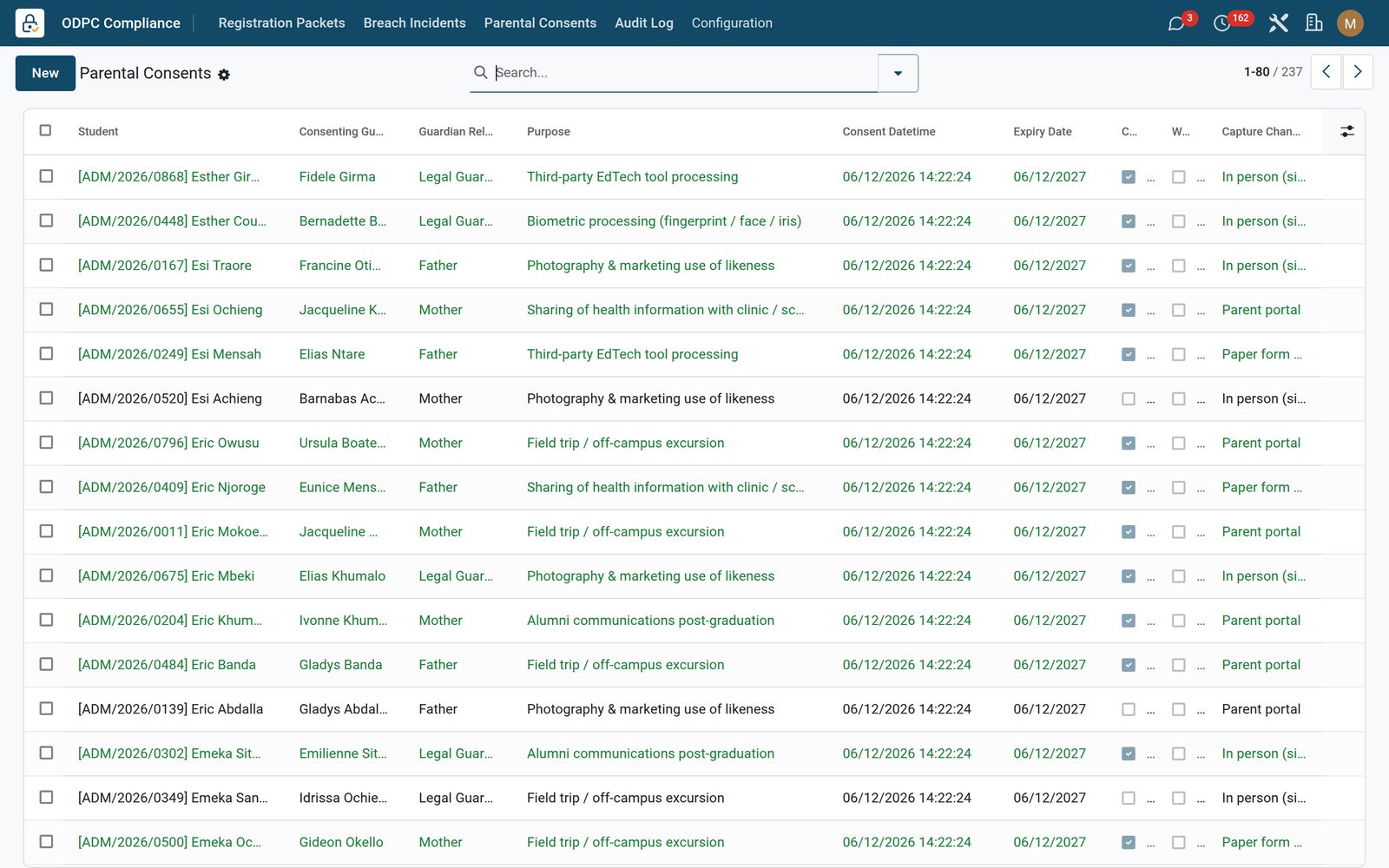
Parental consent is not one signature at enrolment. This records which purpose the parent agreed to, when, and through what — so withdrawing consent for photographs does not accidentally withdraw it for the school bus.
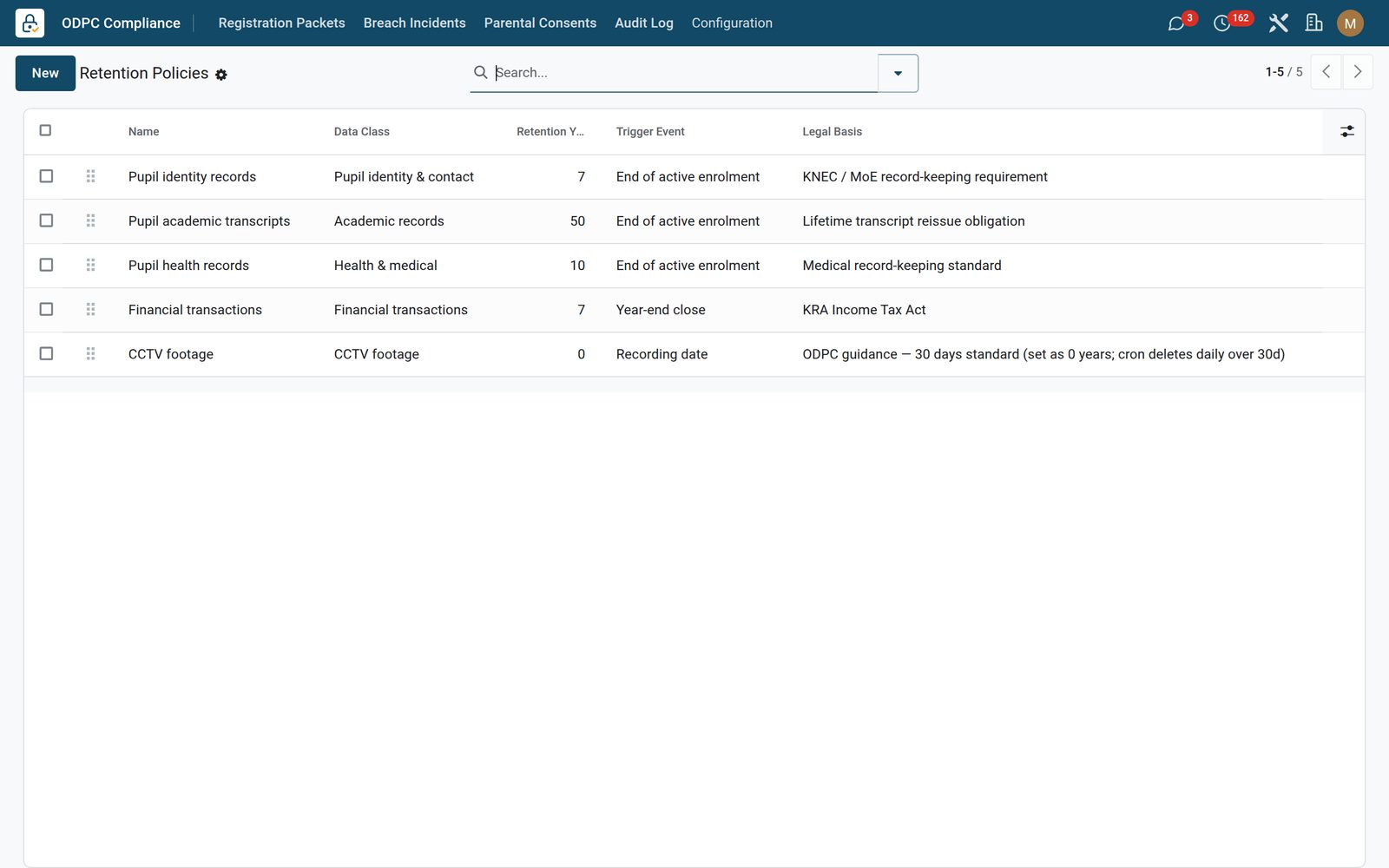
A retention policy per record type: how long it is kept, on what basis, and what happens at the end. Keeping a child’s file for ever is the most common breach a school commits, and it is committed by default.
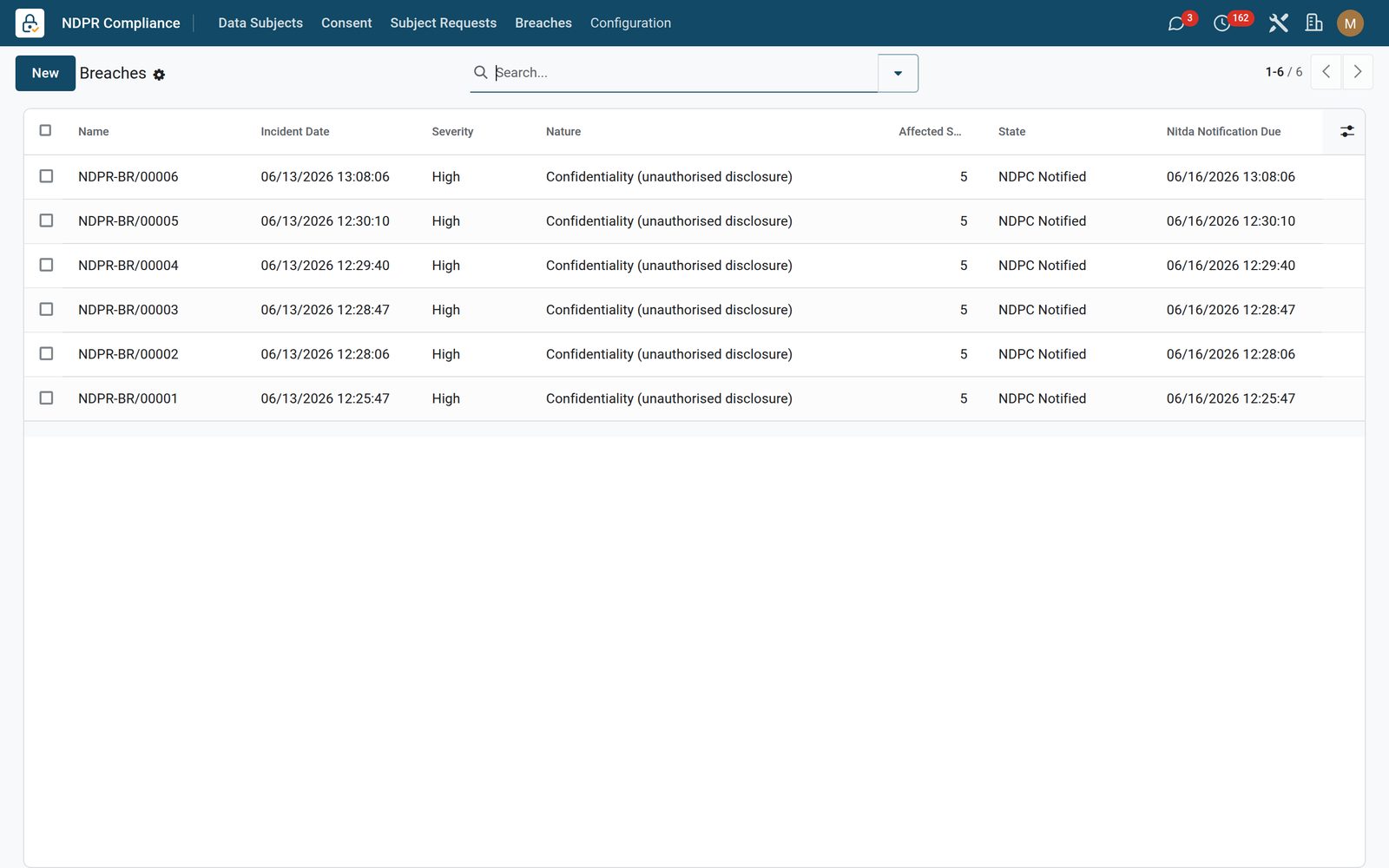
What happened, what was affected, what was done and whether NITDA and the affected people were told. The deadline sits on the record so it cannot quietly pass while the incident is being discussed.
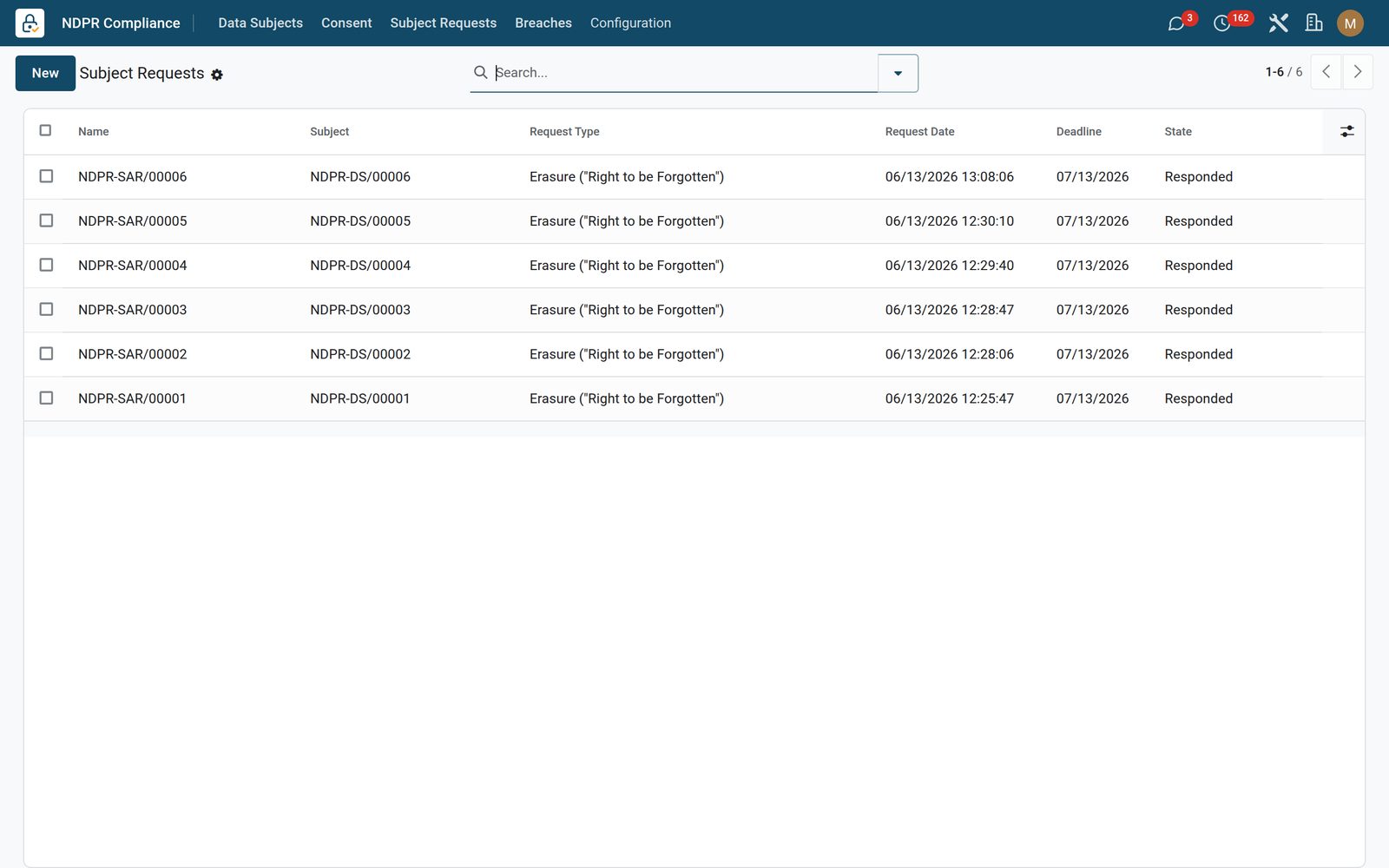
A parent asks what you hold on their child. The request is logged with its deadline, what was asked, and what was sent back — so the response is evidenced, not just remembered.
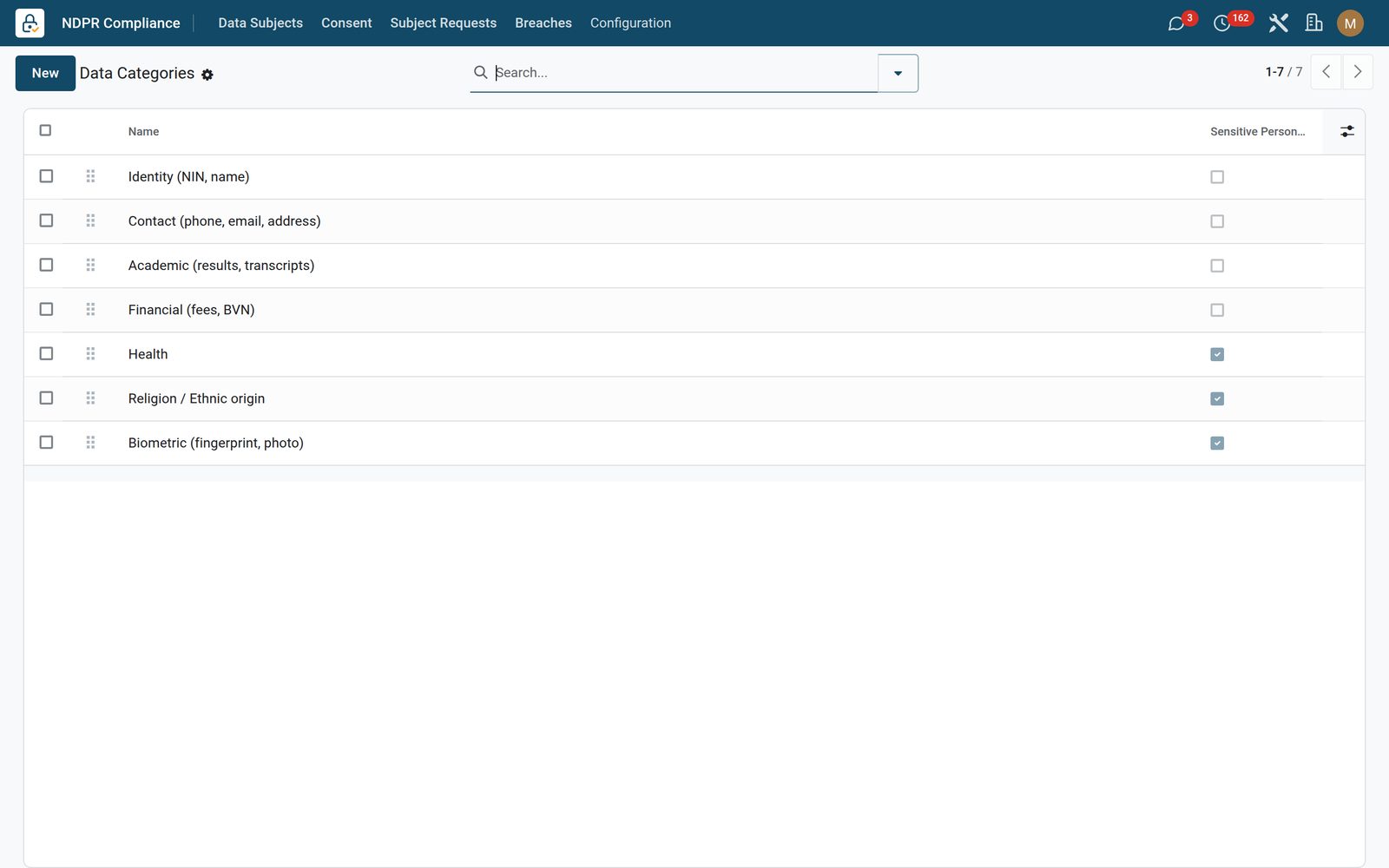
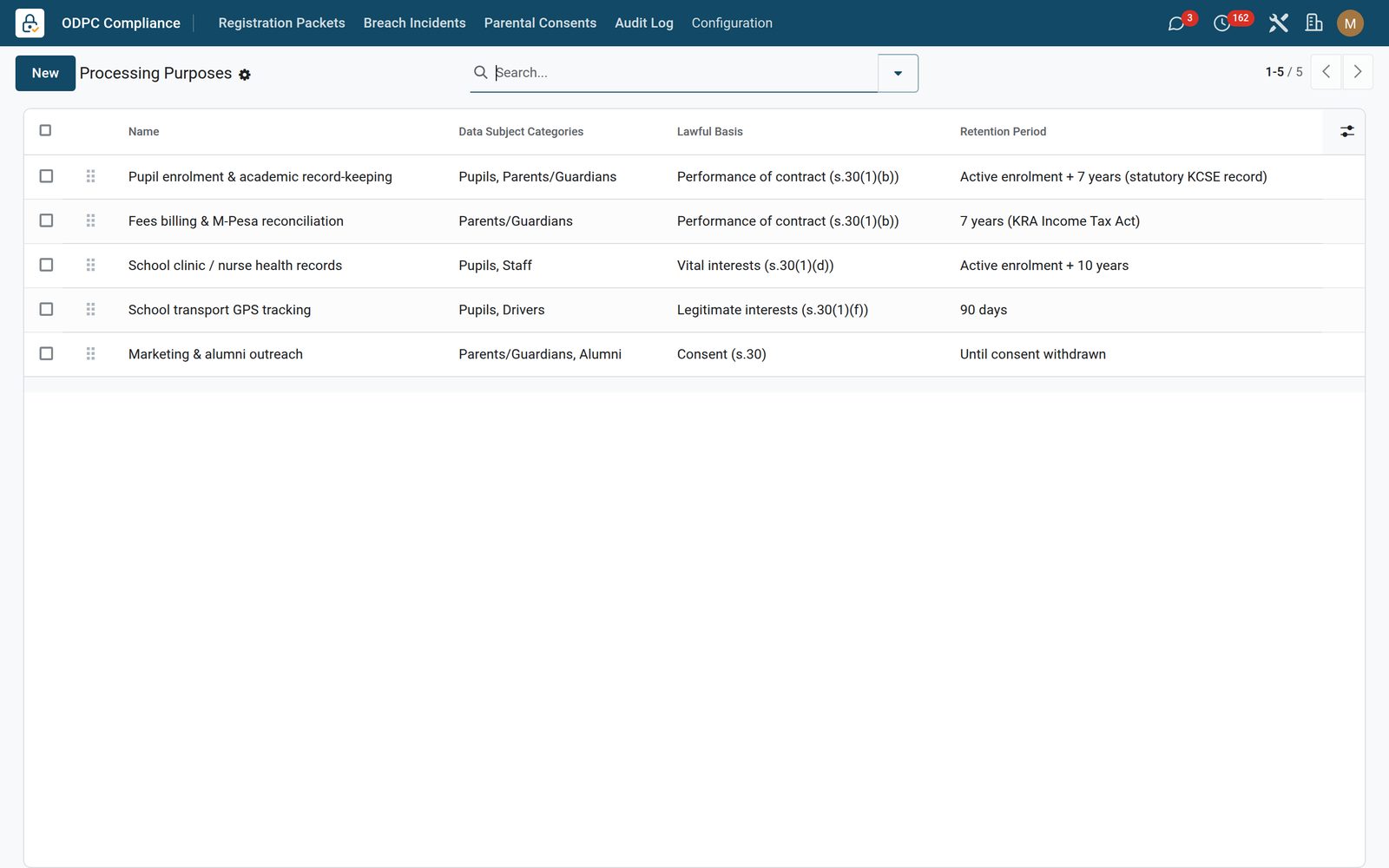
What kinds of personal data the school holds, why it holds each kind, and on what lawful basis. Writing this down once is what turns the other three registers from paperwork into something that can actually be checked.
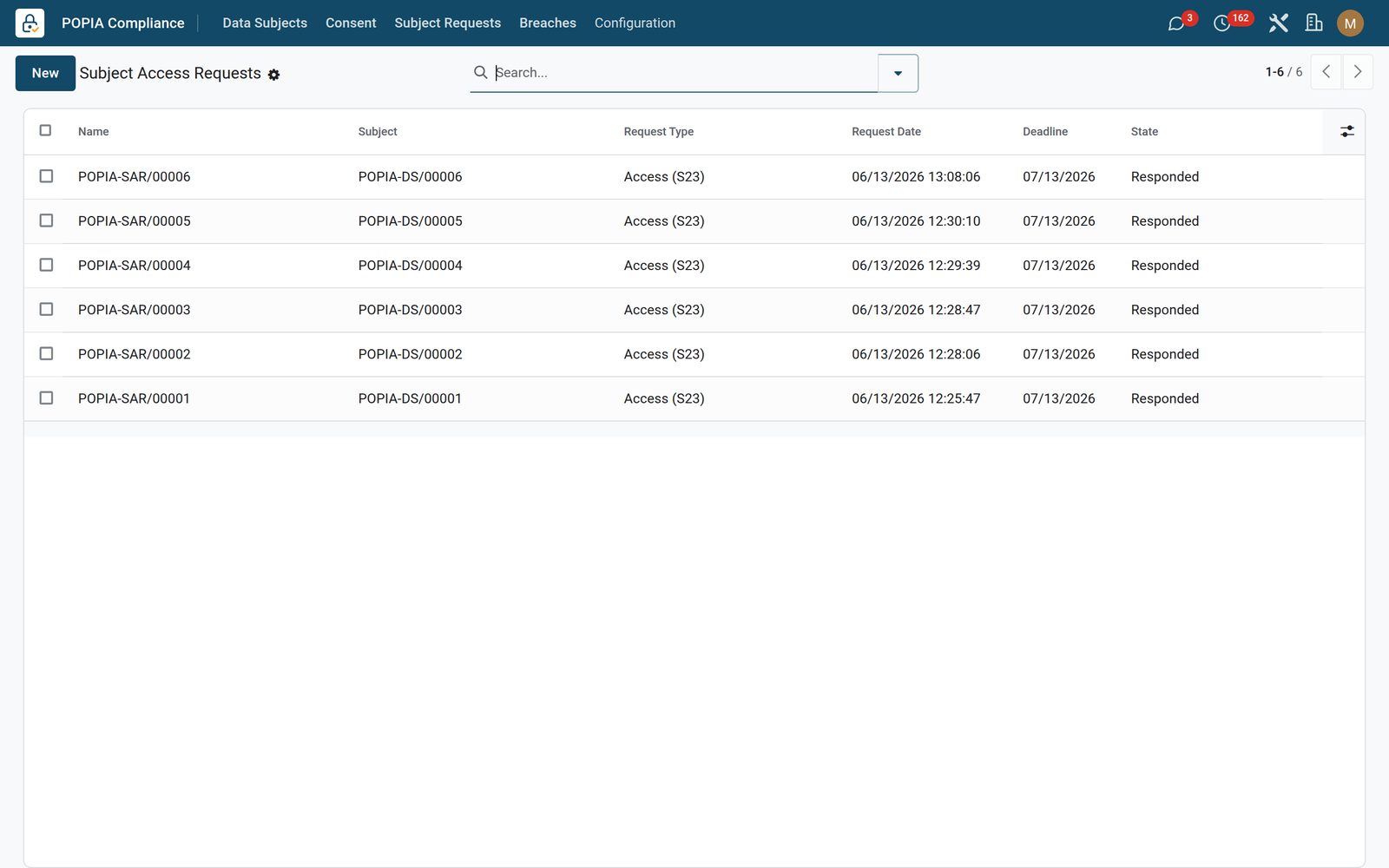
A request to see what you hold, logged with its deadline, its content and the response sent. The evidence that you answered is as important as the answer.
Each processing activity with its purpose, lawful basis, the categories of data subject and personal data, recipients, transfers outside the EEA and its retention period. A school typically has twenty or thirty of these — enrolment, safeguarding, fee billing, payroll, photographs, the bus — and they are all in one list.
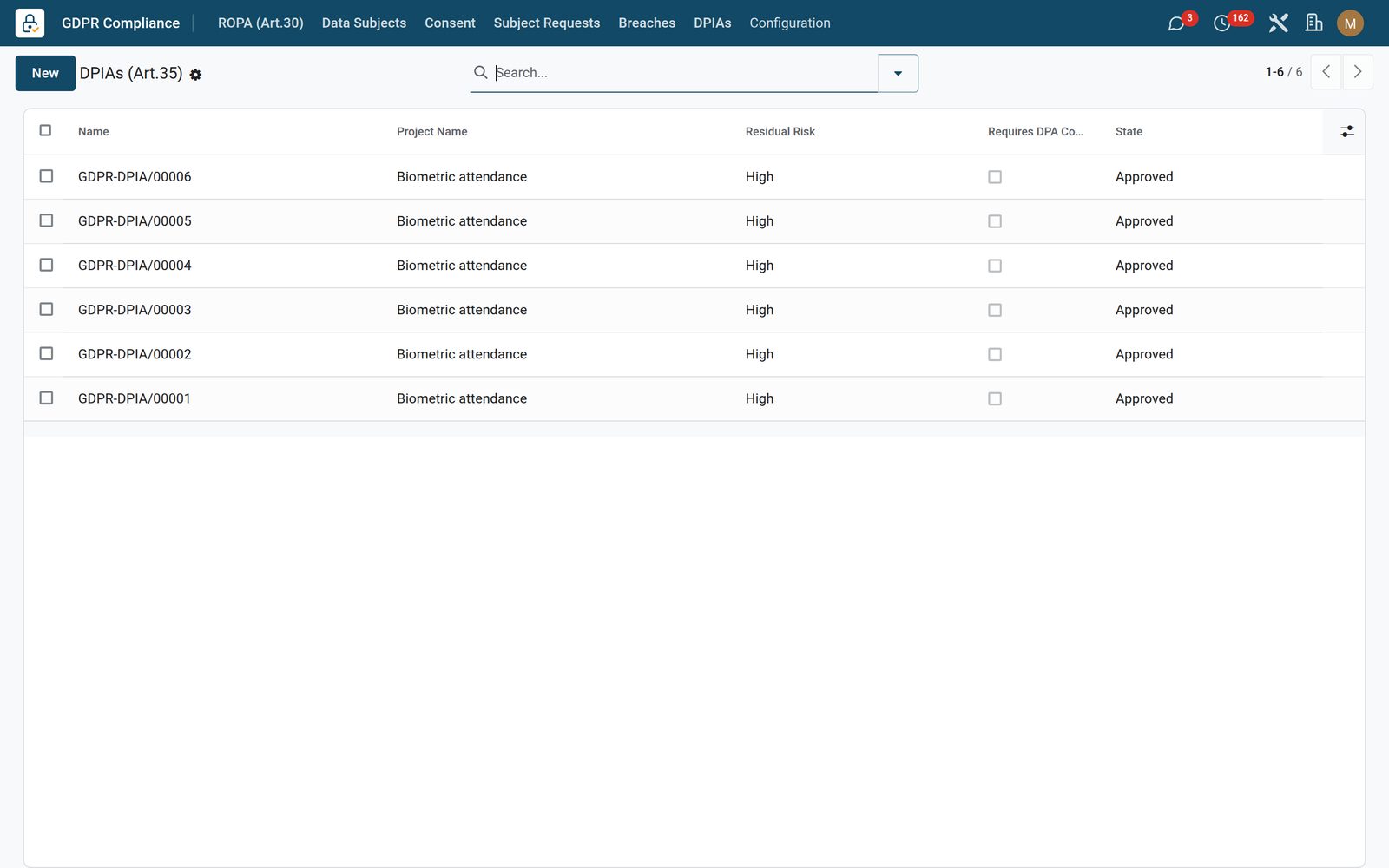
Article 35 wants an impact assessment before high-risk processing. The record holds the risk, the mitigation, the residual risk and the sign-off, so the assessment exists before the system goes live rather than being written afterwards to satisfy an auditor.
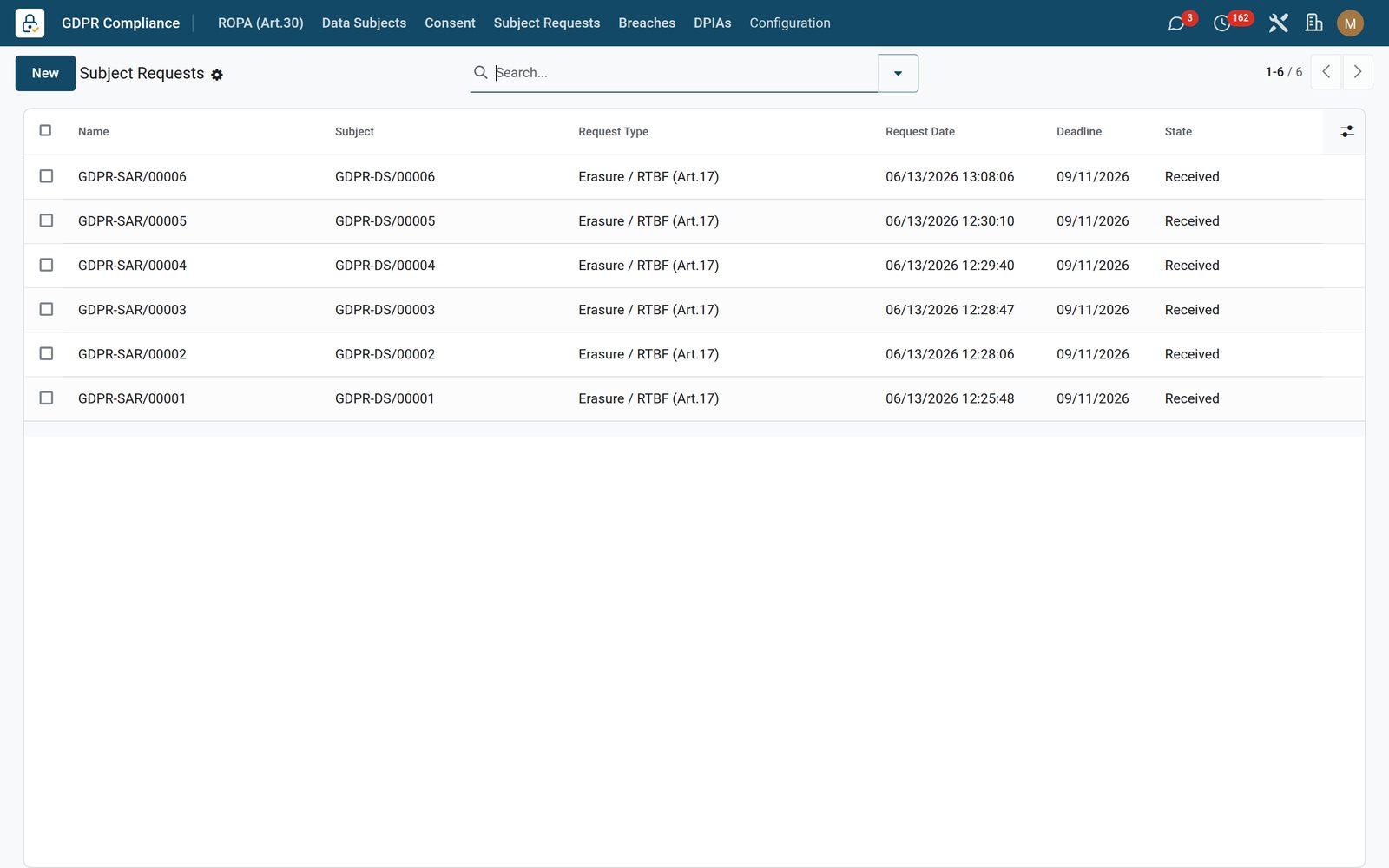
A parent asks for everything you hold on their child. The request, its deadline, what was provided and when are all on one record — which is what turns “we responded” into something you can show.
What's inside
43 items in 12 areas, every one shipping with the app today.
Works with
Compliance & Returns shares one database with the rest of the EduPrime and BridgeERP: these are the apps it already talks to, with nothing to buy in between.
Compliance & Returns needs these to run; they come with it in the same plan.
Any BridgeERP app can join the same database.
 AccountingFull double-entry accounting, bank reconciliation, assets, budgets and statutory reports.
 ExpensesEmployee expense claims with receipt capture and reimbursement.
 InvoicingCustomer invoices, vendor bills, payments and tax handling.
 SignSend documents for legally binding electronic signature.
 SubscriptionsRecurring contracts, automatic renewals and MRR reporting.
 EmployeesEmployee records, contracts, attendance, skills, appraisals and referrals.
In the suite
EduPrime Core Academics
 Fees & Billing
 Assessment Engine
 Timetable
 Admissions
 Library
 School Transport
 School Clinic
 School Shop
 Virtual Classroom
 Payments & Mobile Money
 Bria Insights
 School HR & Payroll
 Boarding & Hostel
 Meals & Catering
 Facilities
 Clubs & Activities
 Discipline
 Parent Portal
 Counselling
 Early Childhood
 Science Labs
 Learner Portfolio
 Special Needs
 Alumni & Giving
 School Events
 SCORM Courseware
 Plagiarism Check
 CBET / CBC
 IB Programmes
 Research Management
 Continuing Education
 Placements & Careers
 EduPrime eLearning
 School Website
Add it to your EduPrime plan, priced per student, or start a free trial and see it running first.