







Discipline: Behaviour incidents, merits, sanctions and guardian notification

+$1.48/mo at 500 students. Free instant access, no credit card required.

Works with
  • Academics
Discipline in the EduPrime: Behaviour incidents, merits, sanctions and guardian notification
01

Write it up once, properly

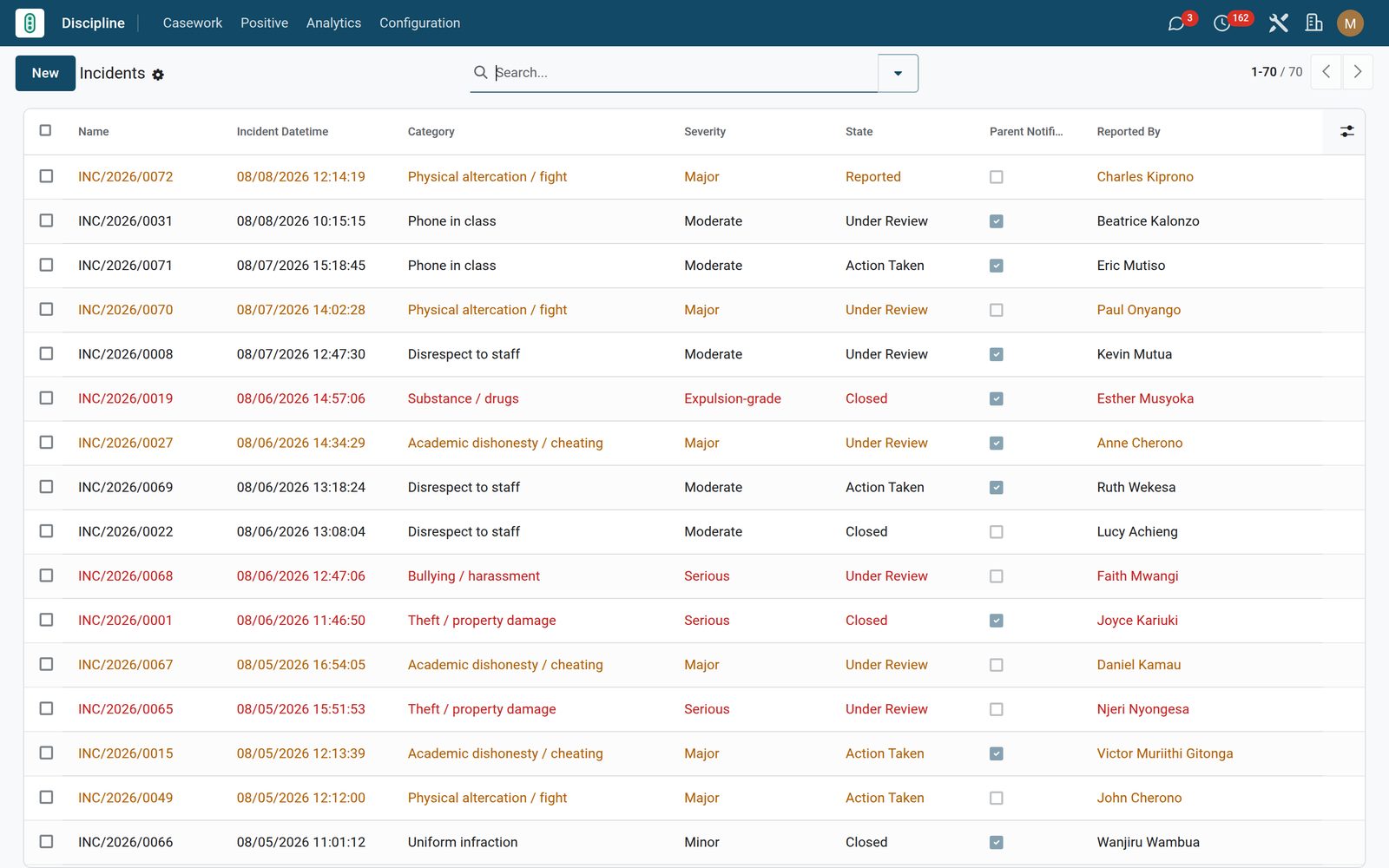
An incident carries everything a hearing will later ask for: the date and time, every pupil involved, the category, where it happened, who witnessed it, a full written account and the member of staff who reported it. Five of those are required before it will save — the pupils, the category, the severity, the written account and the reporting member of staff — so a half-finished write-up never reaches the file. Each one is numbered automatically as INC, year, sequence, carries counters for the pupils involved and the consequences recorded, and moves through reported, under review, actioned, under appeal, closed or dismissed — with every severity change, state move and parent notification tracked in its history, and a re-open button for the case that was closed or dismissed too early. Nine behaviour categories install ready to use, from uniform and lateness through phones, disrespect, fighting, bullying and theft to substances and cheating, and each one carries the severity it should default to, so every write-up opens on your policy’s grade rather than the individual teacher’s guess. Reword them to match your own policy, archive the ones you do not use — and the nine that ship arrive already translated into the other languages in the app.
Discipline: Write it up once, properly
02

Twelve consequences, and the right to appeal all of them

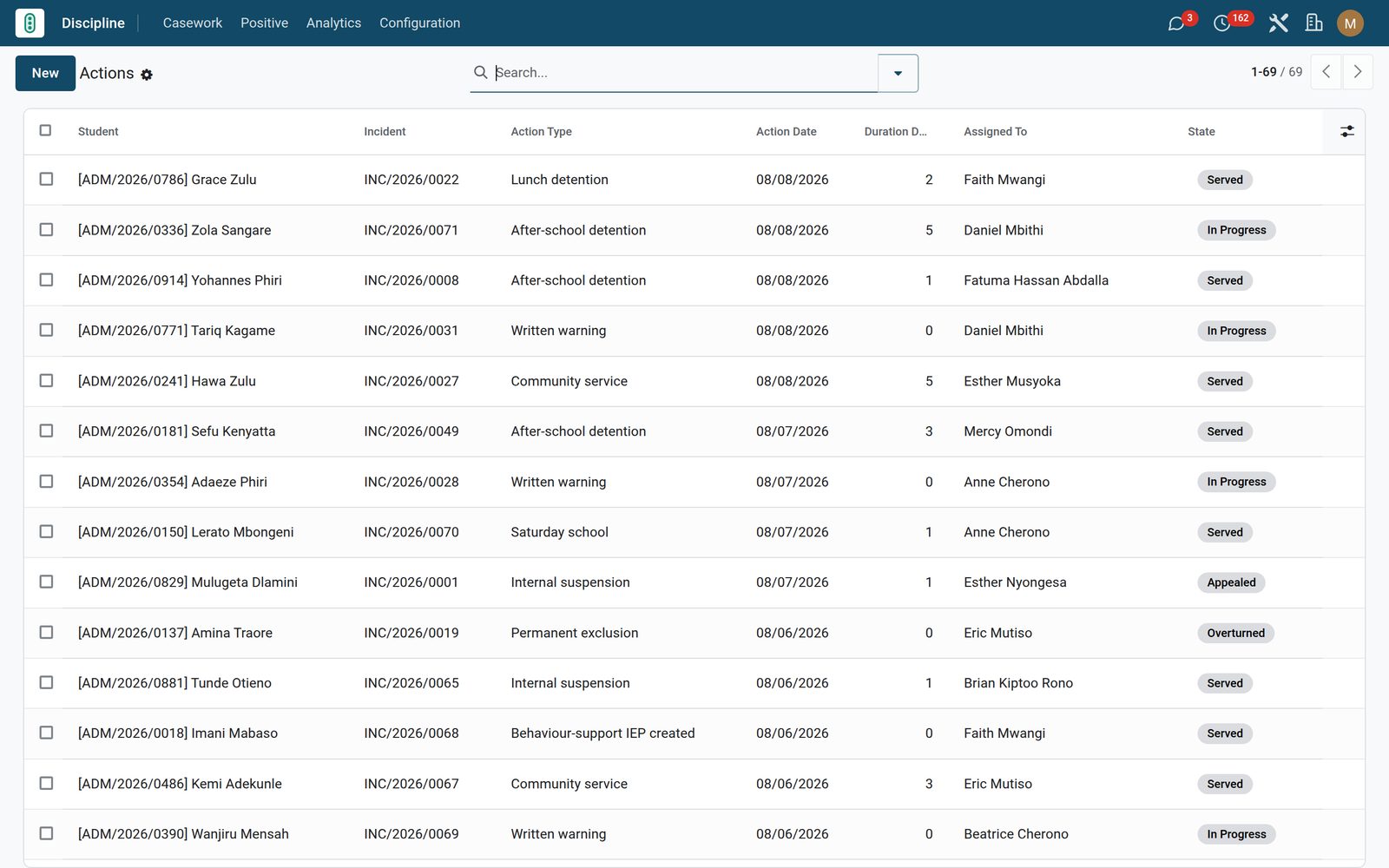
Record what actually happened to the pupil, on the incident’s own Actions tab. Twelve consequence types run from a verbal or written warning through lunch and after-school detention, Saturday school and community service to internal and external suspension and permanent exclusion, plus a mandatory parent meeting, a counselling referral or a behaviour-support plan. Each carries its own date, a duration in days for detentions and suspensions, and the member of staff supervising it — and an incident cannot be marked actioned until at least one consequence sits on it. Appeals are part of the flow, not an afterthought: the grounds are written down, then the case is upheld or overturned, and either way the decision stays on the record.

Discipline: Twelve consequences, and the right to appeal all of them
03

The case goes up the line, in writing

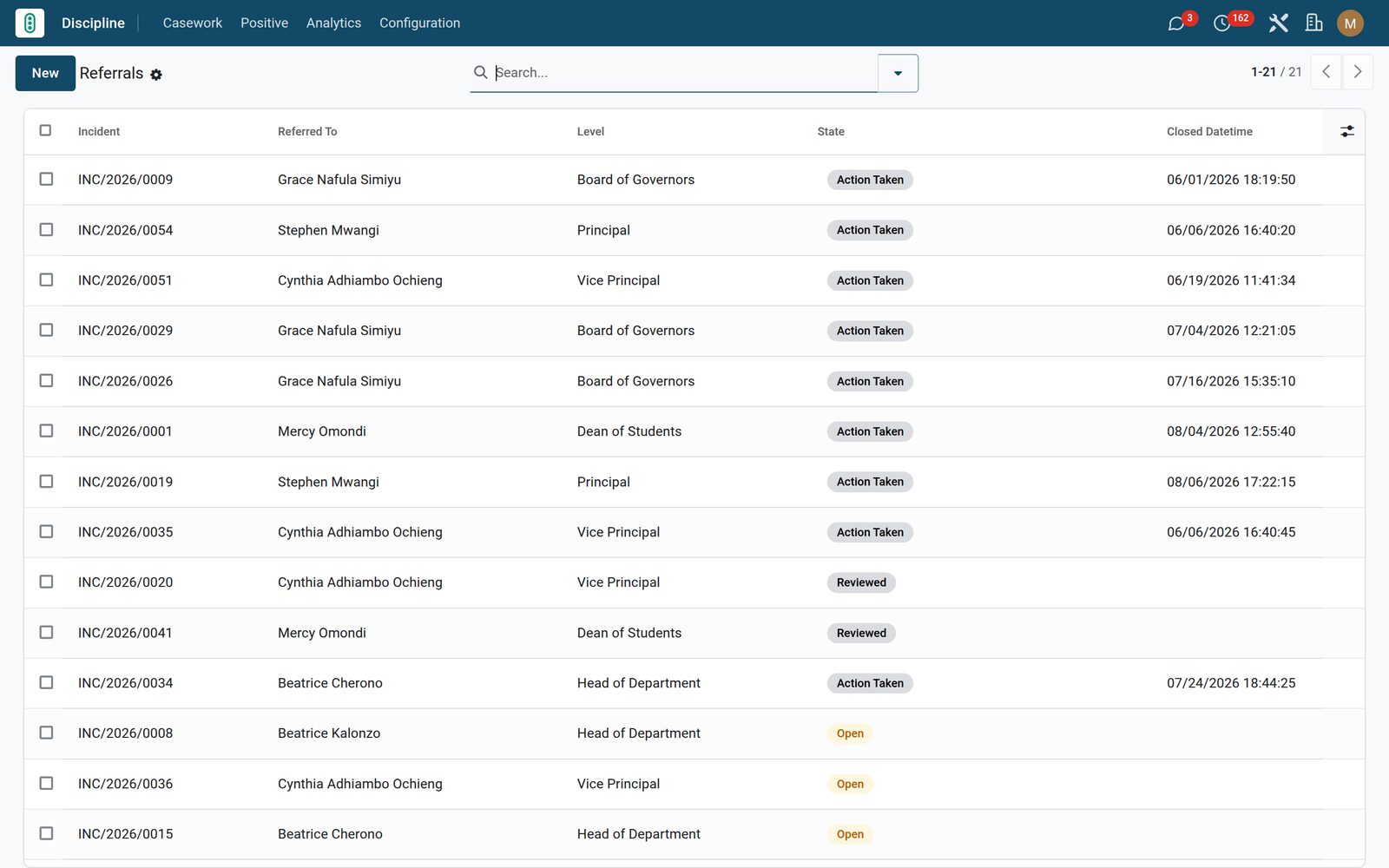
When something outgrows the classroom, raise a referral and hand it on: Head of Department, Dean of Students, Vice Principal, Principal, Board of Governors. The referral names the member of staff it goes to and carries the written grounds; it comes back reviewed, actioned with a written outcome and a closing timestamp, or returned for insufficient grounds. And the escalation is not optional where it matters: a serious or expulsion-grade incident cannot be closed at all until the referral is linked on the incident — the app refuses the save and names the grade that requires escalation.

Discipline: The case goes up the line, in writing
04

Nobody has to remember to call the parents in

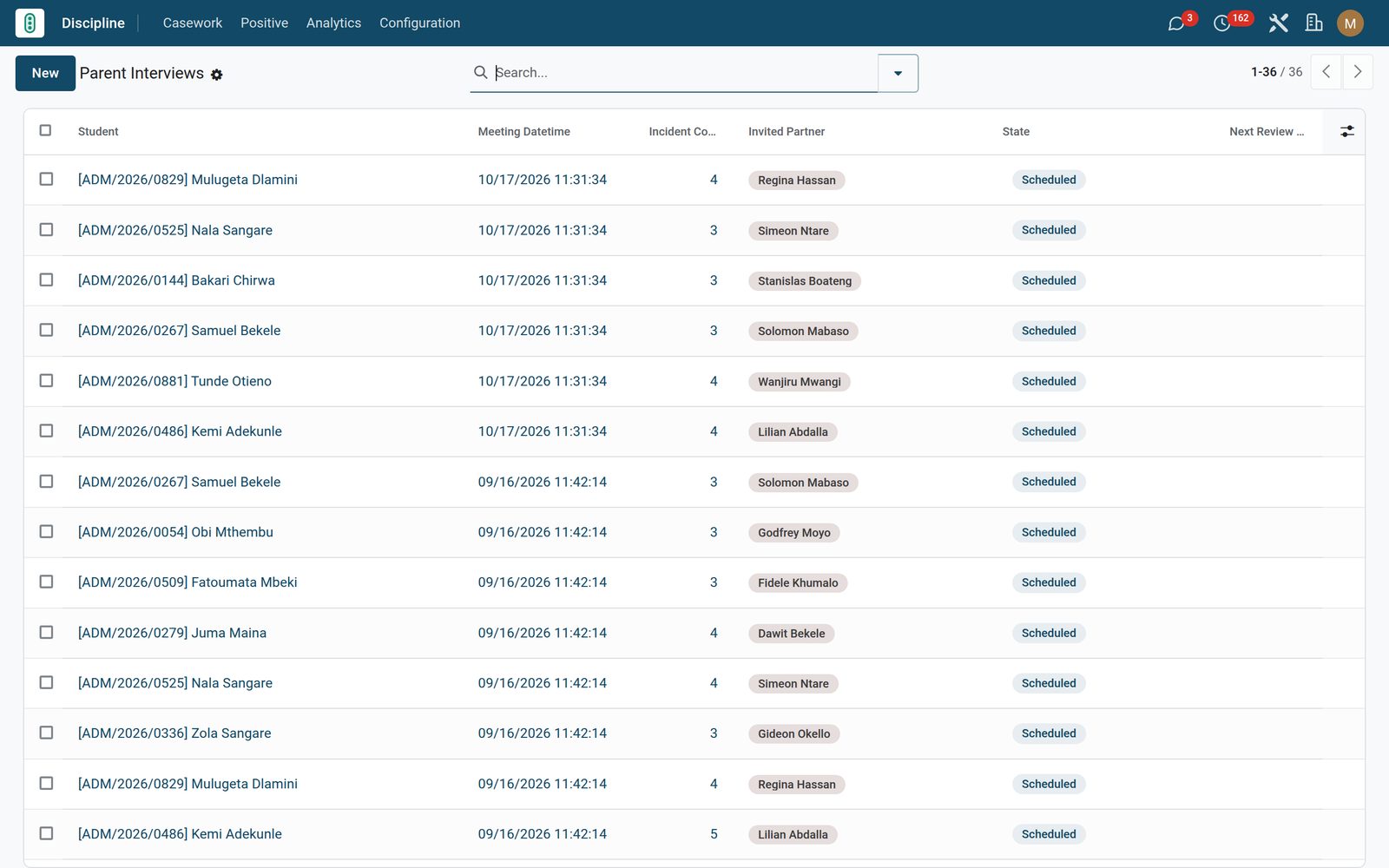
One button notifies the guardians: the app finds each pupil’s primary guardian, posts the notice to them on the incident itself and stamps the date and time they were told, so “we informed the parents” is a record rather than a recollection. When a pupil keeps reappearing, a daily check counts every un-dismissed incident from the last four months and, at three or more, books a mandatory parent interview a week out with the guardian already on the invitation — and will not book a second one for the same pupil inside a month. The meeting records the staff who attended, the discussion notes, the agreed action plan and a next review date, and closes as held, parent no-show or rescheduled.

Discipline: Nobody has to remember to call the parents in
05

Count what goes right, not only what goes wrong

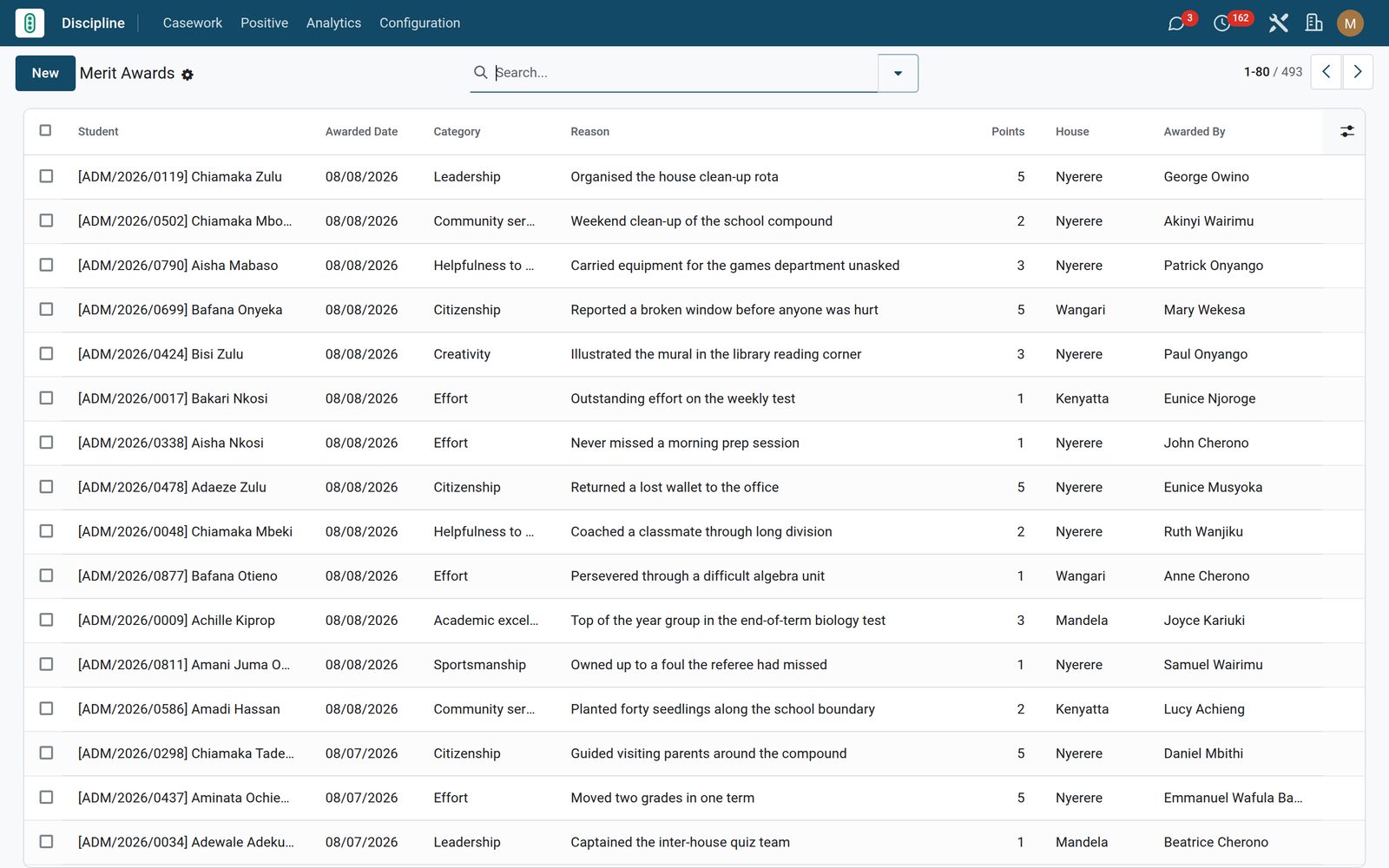
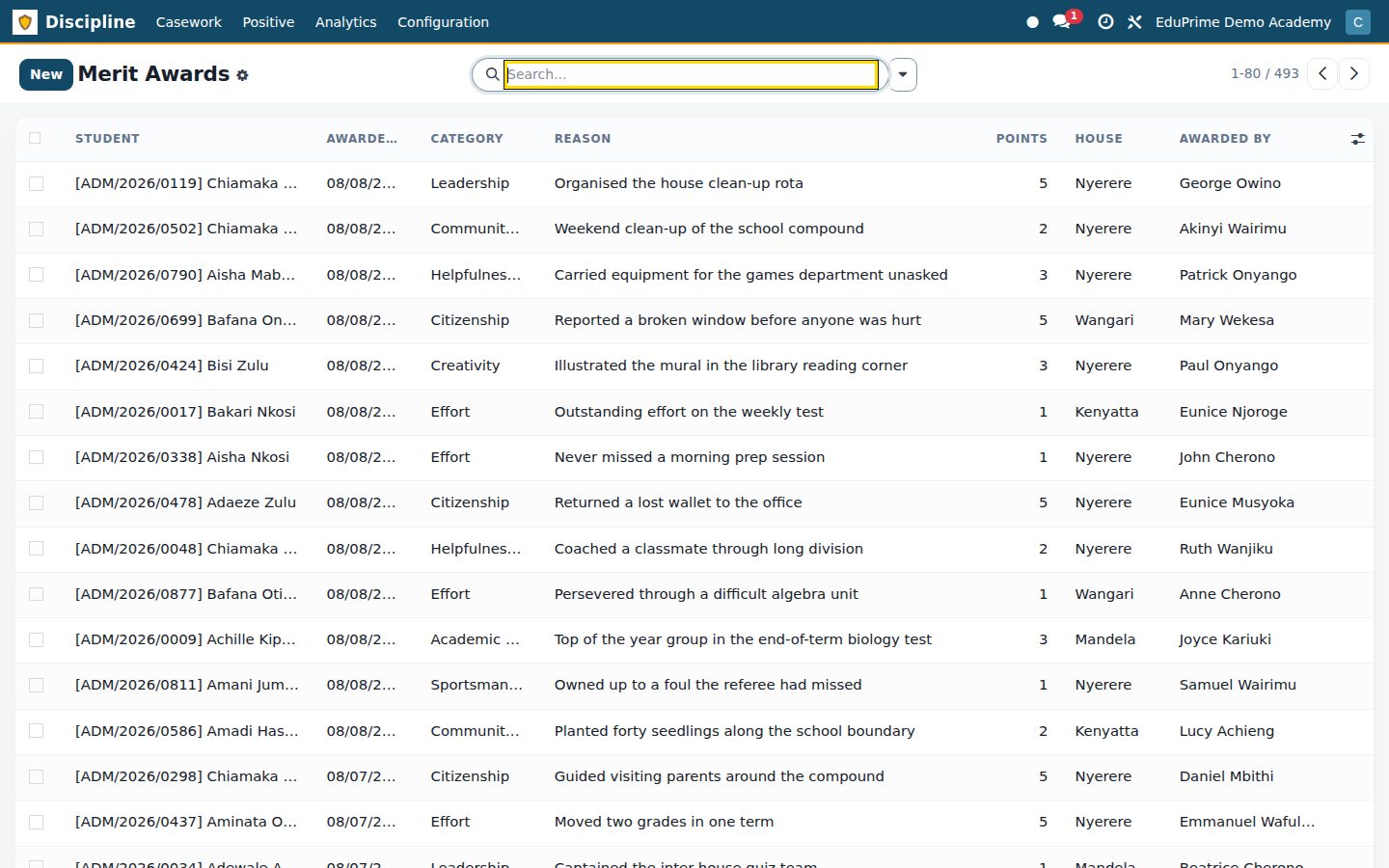
Merit awards put house points on the same record as the incidents, across eight categories — academic excellence, effort, citizenship, leadership, sportsmanship, community service, creativity and helpfulness to peers. Each award carries its points, the reason in plain words, the member of staff who gave it and the house it counts for. They are not decoration: merits add straight into the pupil’s conduct score on the Behaviour Report Card — a baseline of 100 that rises with every point awarded and falls by the weight of each un-dismissed incident.

Discipline: Count what goes right, not only what goes wrong
06

Tiered support for the pupils a sanction will not fix

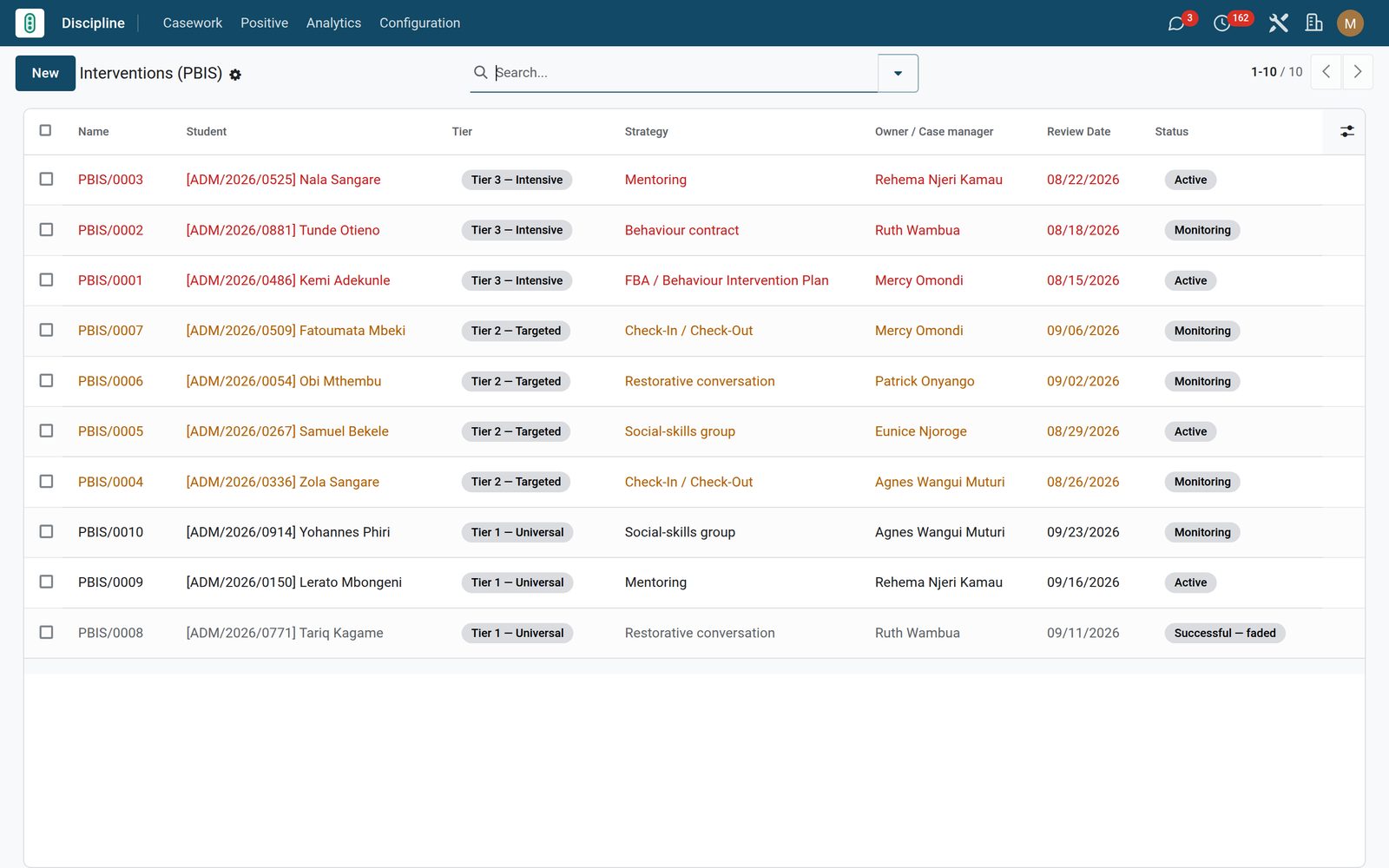
The app carries the PBIS / MTSS framework the behaviour specialists work to. Open an intervention at Tier 1 universal, Tier 2 targeted or Tier 3 intensive, choose the strategy — check-in / check-out, mentoring, a behaviour contract, a social-skills group, a counselling referral, a restorative conversation or a full FBA / behaviour intervention plan — name the case manager, write the target behaviour and set the review date. Each plan is numbered PBIS, keeps its progress notes, and runs active, monitoring, then successful and faded — or closed outright, or escalated a tier in one press, with the move posted onto its own history.

Discipline: Tiered support for the pupils a sanction will not fix
07

The questions a deputy head actually asks

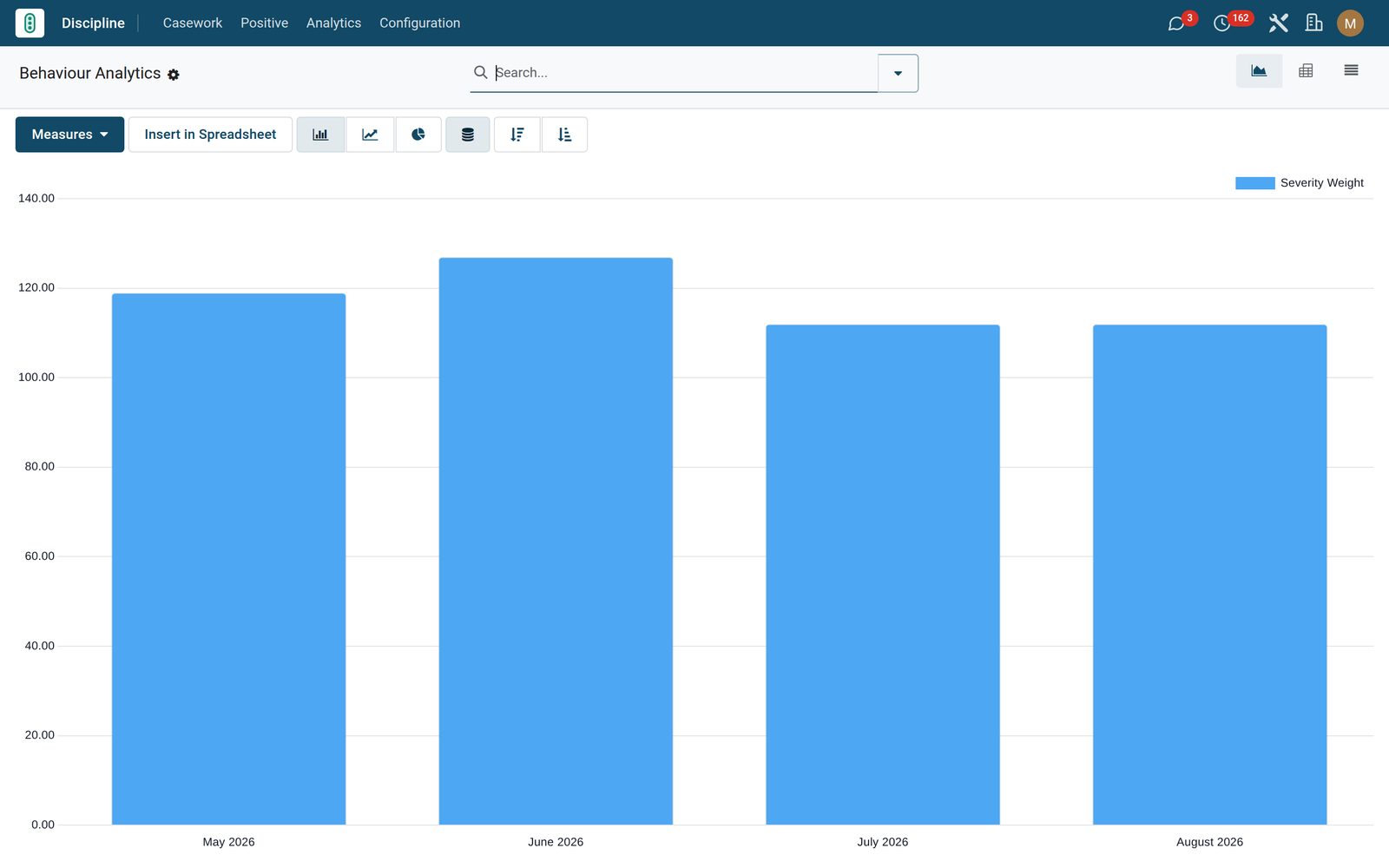
Behaviour Analytics opens on the trend graph, which plots incidents by month, weighted by severity rather than simply counted — the measure that tells you whether things are getting worse or just noisier. Switch the same screen to the pivot and it crosses every category against every severity, so you can see at a glance whether the problem is phones in Form 2 or fights at break. And the Behaviour Report Card prints from the pupil’s own record: conduct score, merit points, demerit weight and open incidents across the top, then every incident and every merit award listed in full for the file, the parent meeting or the panel.

Discipline: The questions a deputy head actually asks

What's inside

Everything in Discipline

12 items in 7 areas, every one shipping with the app today.

  • Casework

    • Incidents
    • Actions
    • Referrals
    • Parent Interviews
  • Positive

    • Merit Awards
    • Interventions (PBIS)
  • Configuration

    • Categories
  • Analytics

    • Behaviour Analytics
  • Documents it prints

    • Behaviour Report Card
  • It runs by itself

    • Discipline: auto-schedule parent interviewsRuns daily
  • Roles it ships

    • Discipline Officer
    • Discipline Manager

Put Discipline to work

Add it to your EduPrime plan, priced per student, or start a free trial and see it running first.