







A unit of competency, not a subject with a mark
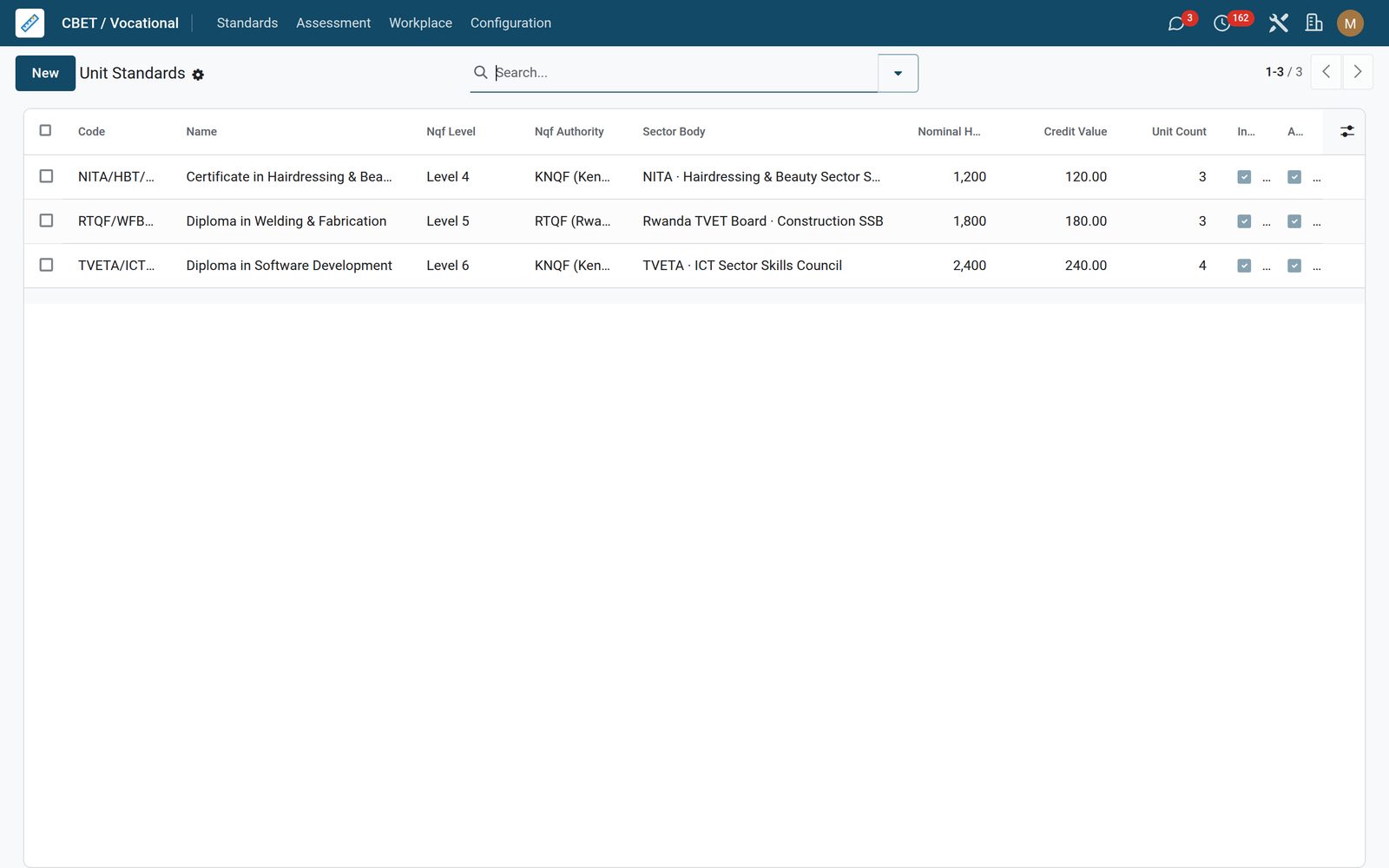
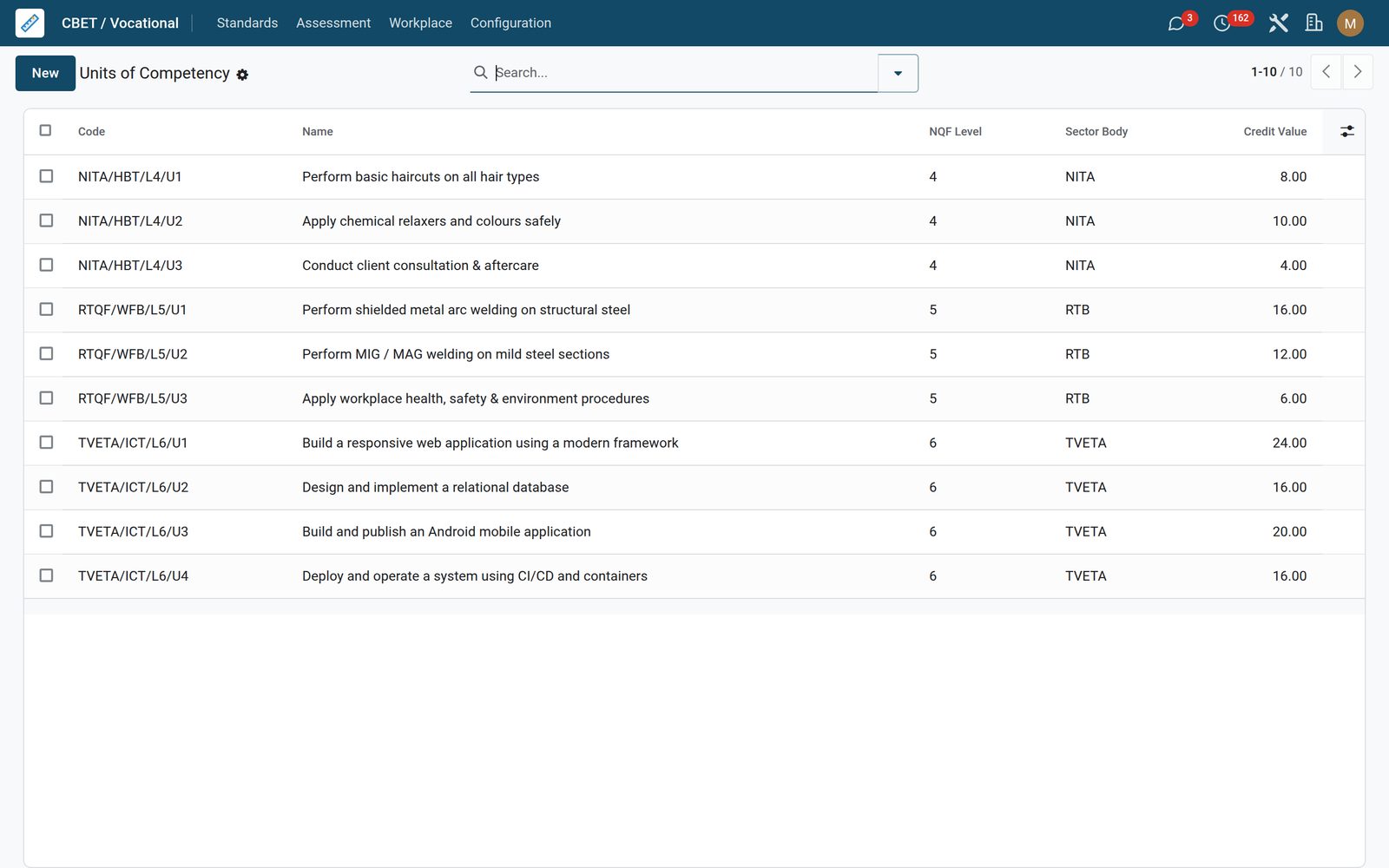
Each unit carries its code, its NQF level, its nominal hours and its credit value — the four things a qualifications authority asks for. NITA/
+$1.48/mo at 500 students. Free instant access, no credit card required.

Each unit carries its code, its NQF level, its nominal hours and its credit value — the four things a qualifications authority asks for. NITA/
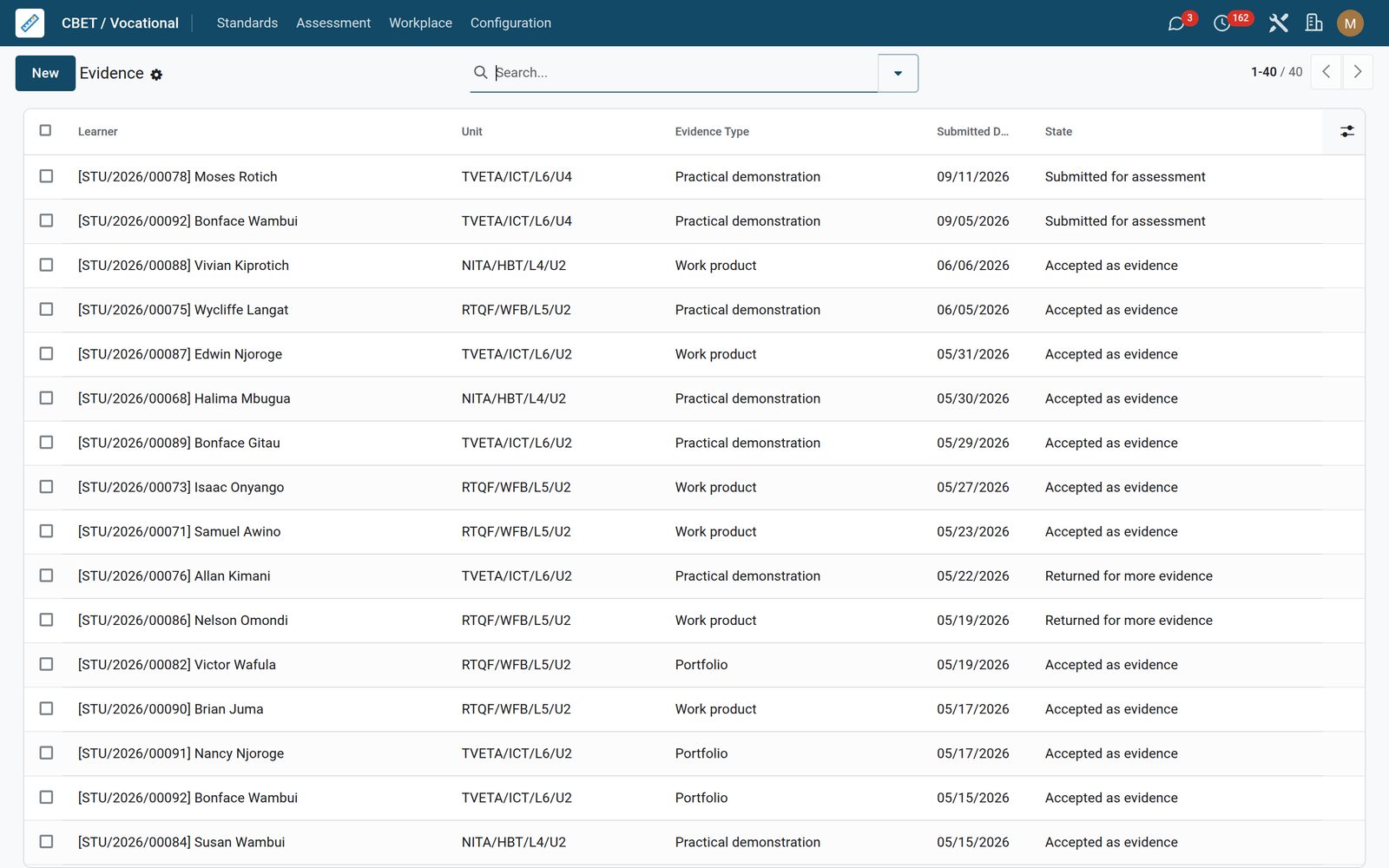
An evidence portfolio per candidate per unit: what was produced, when, by whom, and whether it has been verified. Photographs of finished work, observation records, third-party reports, products, written tests — whatever your sector accepts. The assessment reads from the portfolio rather than replacing it, so when an external verifier asks how you reached a judgement, the answer is a list of artefacts, not a recollection.

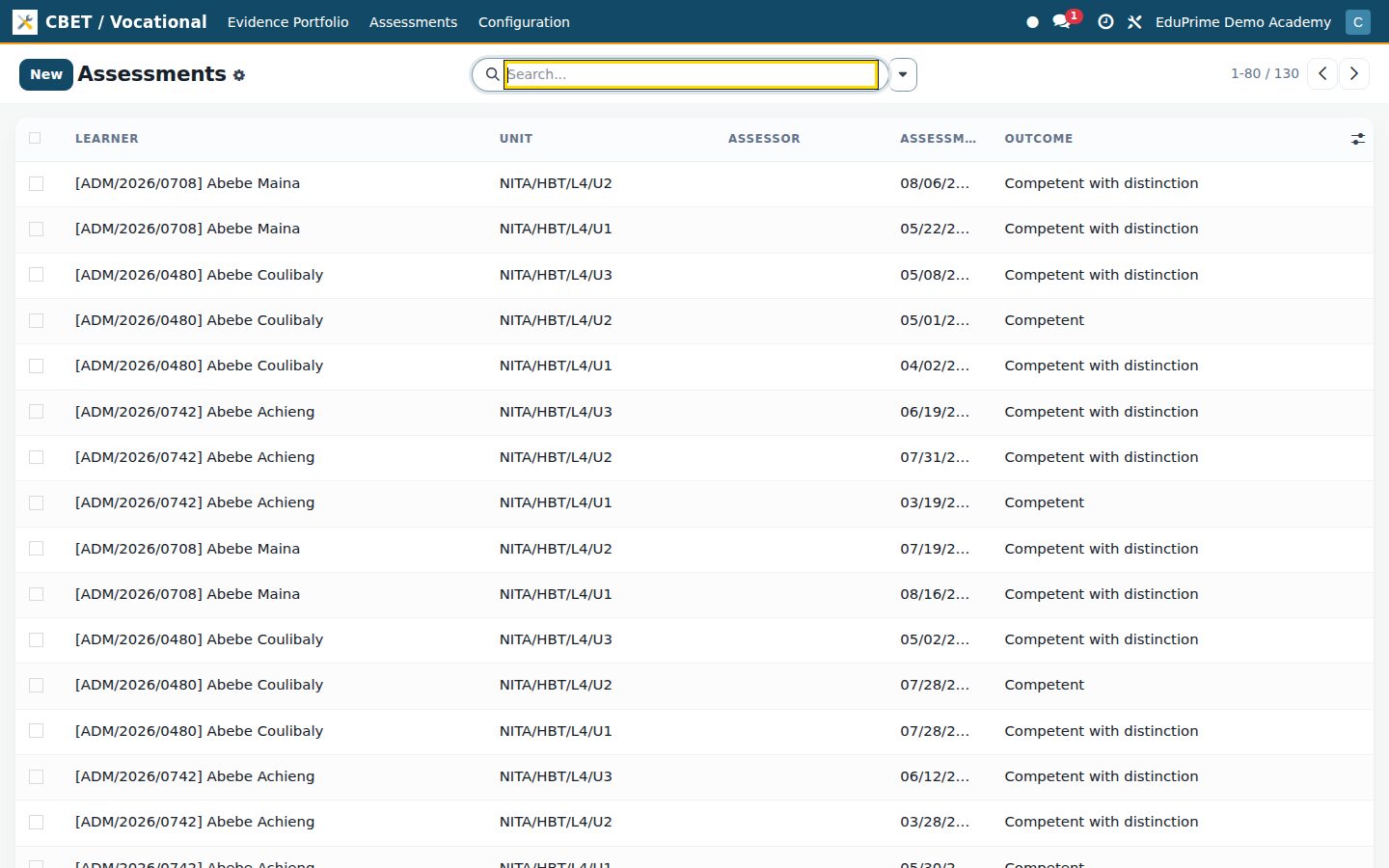
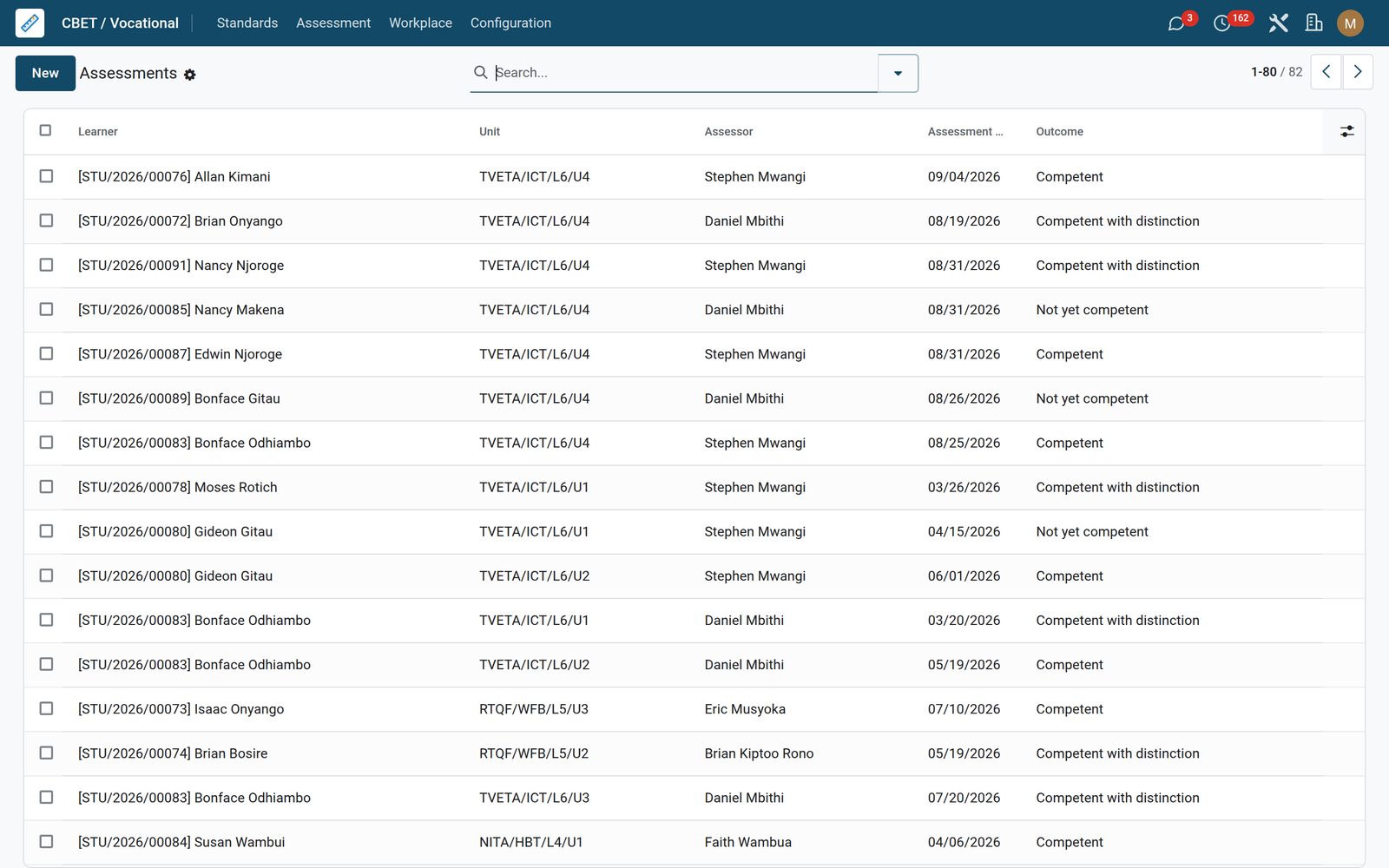
The assessment records the judgement against the unit’s criteria, the assessor who made it, the date, and the evidence it rested on. There is no mark out of a hundred to argue about and no average to hide behind: a candidate is competent against this unit or is not yet, and the record says which criteria are still outstanding. Re-assessment is a new record, so the history of attempts survives.

Unit standards arrive with the app for NITA, RTB and TVETA, each with its performance criteria already loaded. Map your units of competency to them once and every assessment, every certificate and every return afterwards speaks the regulator’s vocabulary. When a body republishes a standard, the mapping is the only thing you revisit.

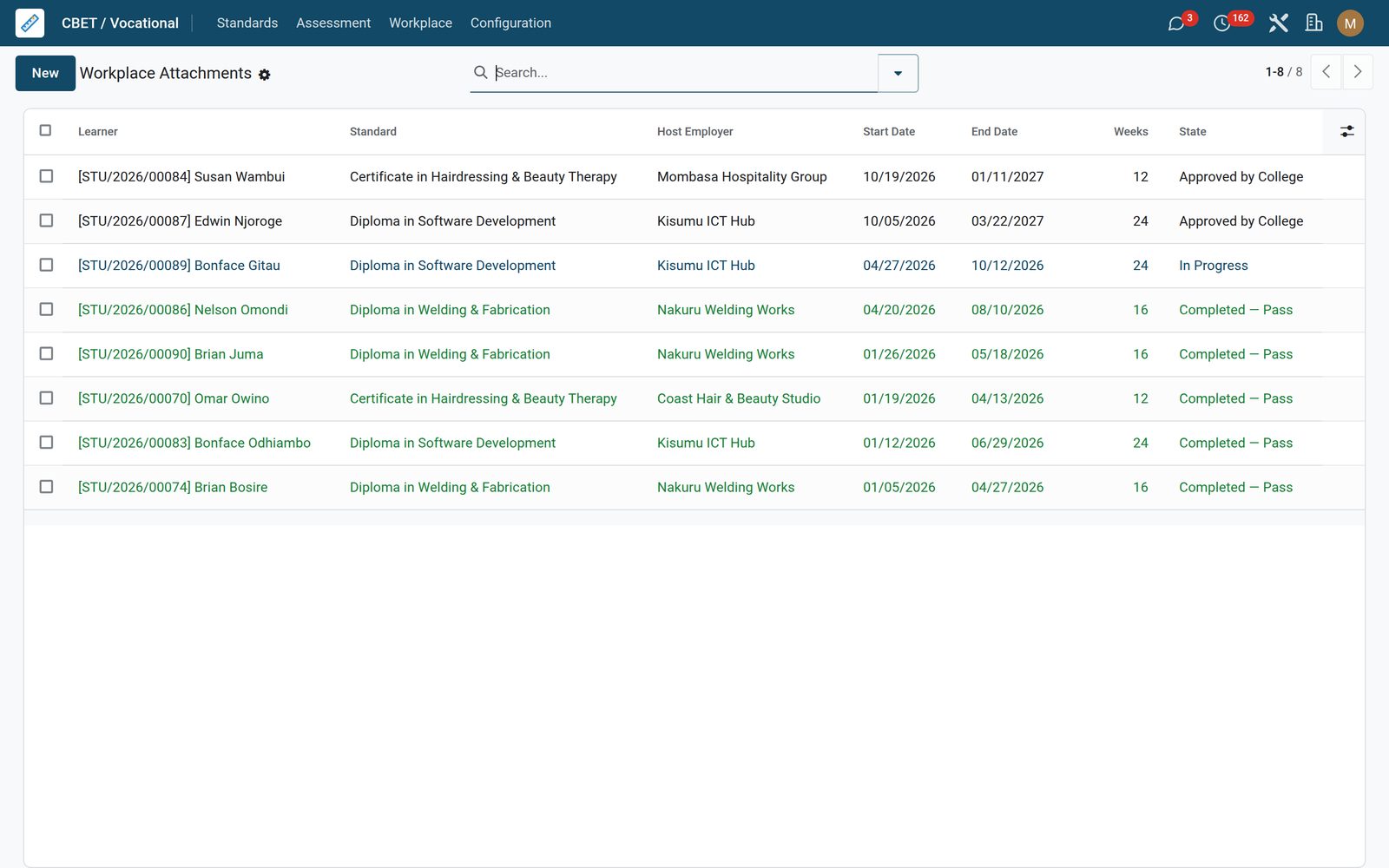
The workplace attachment names the host employer, the dates, the supervising trainer and the units it is meant to cover. Competence demonstrated on an employer’s premises is recorded against the same candidate and the same unit as competence demonstrated in the workshop, so the portfolio is one portfolio.

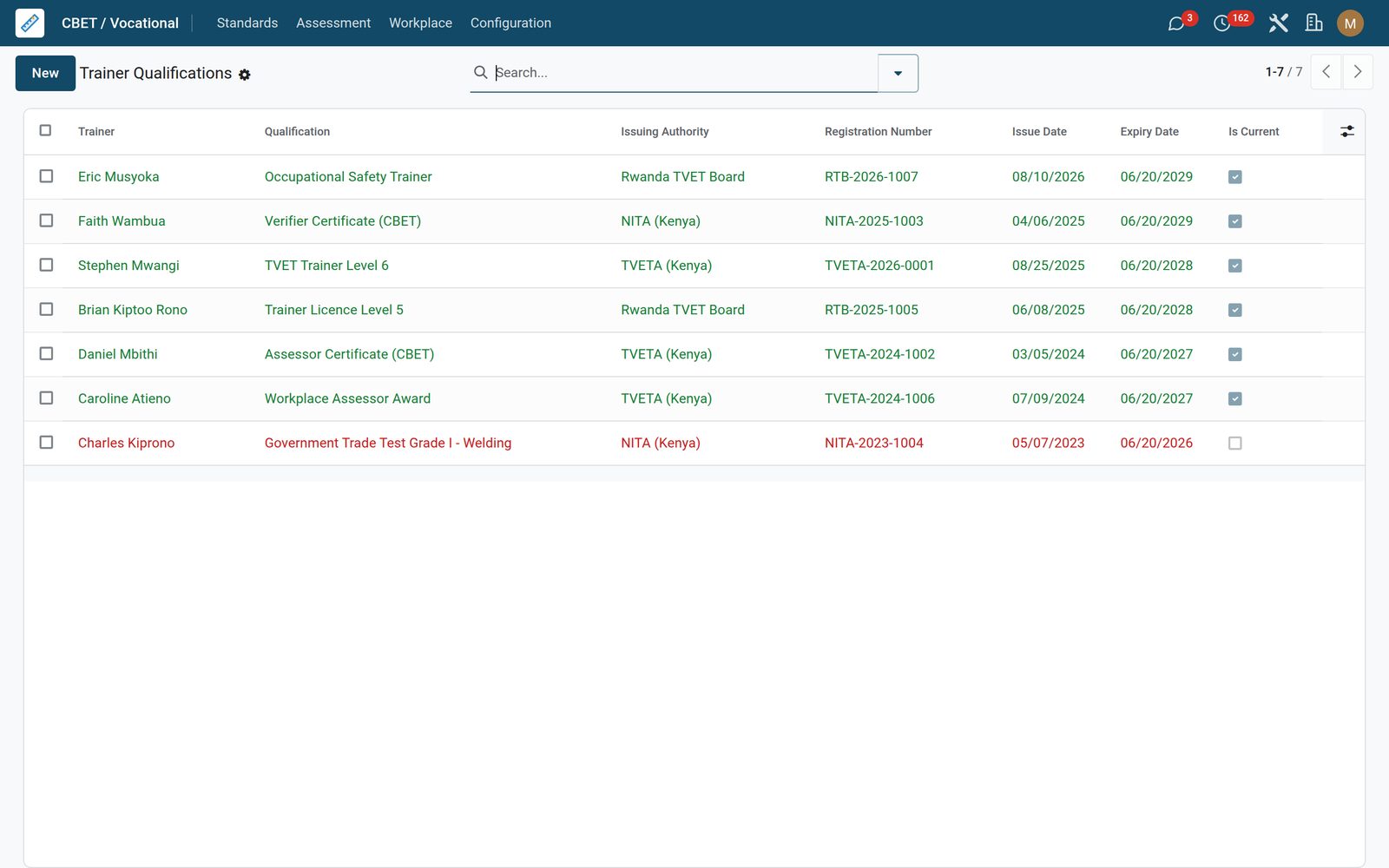
Trainer qualifications are held with their currency and expiry dates, so the question “was this person qualified to assess that unit on that date?” has an answer. It is the question external verification asks first, and the one colleges most often cannot answer from a filing cabinet.

What's inside
14 items in 5 areas, every one shipping with the app today.
Works with
CBET / CBC shares one database with the rest of the EduPrime and BridgeERP: these are the apps it already talks to, with nothing to buy in between.
CBET / CBC needs these to run; they come with it in the same plan.
Any BridgeERP app can join the same database.
In the suite
Add it to your EduPrime plan, priced per student, or start a free trial and see it running first.