










01
Every pregnancy, followed from the first visit
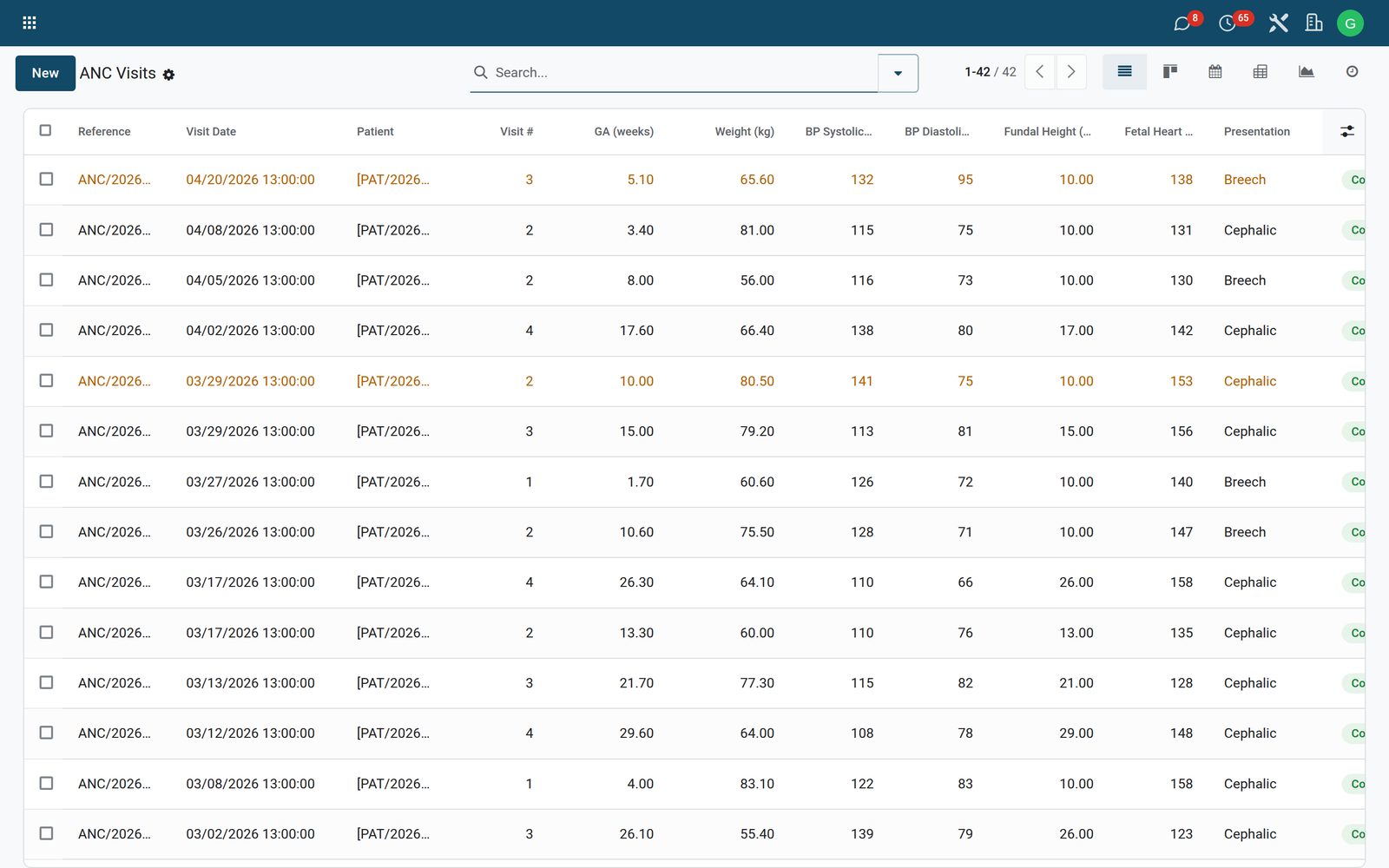
The pregnancy episode with EDD, gravida and parity and risk factors; ANC visits with weight, BP, fundal height and tests; the PMTCT cascade so no HIV-exposed baby is lost.
 Maternity: Antenatal care, labour and delivery, postnatal and newborn records
Mother and child from the first antenatal visit to the child welfare clinic: the pregnancy episode, ANC with risk factors, the partograph in labour, delivery and newborn registers, postnatal care for both, PMTCT, family planning, CWC growth on WHO standards with milestones and IMCI — plus the fertility clinic, with MoH 711 reporting.
+$38.40/mo at 20 practitioners. Free instant access, no credit card required.
 Wards & Inpatient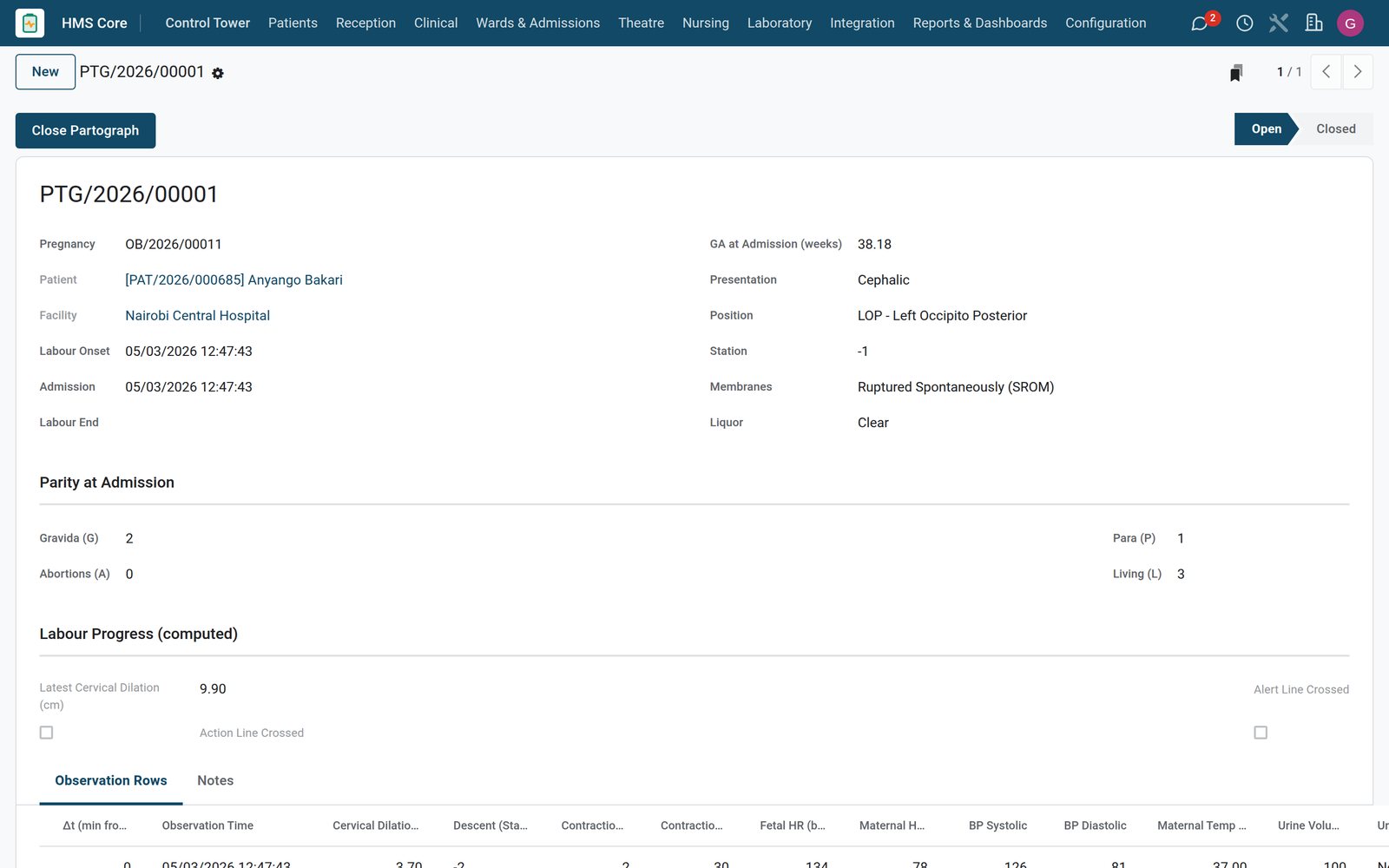
The pregnancy episode with EDD, gravida and parity and risk factors; ANC visits with weight, BP, fundal height and tests; the PMTCT cascade so no HIV-exposed baby is lost.
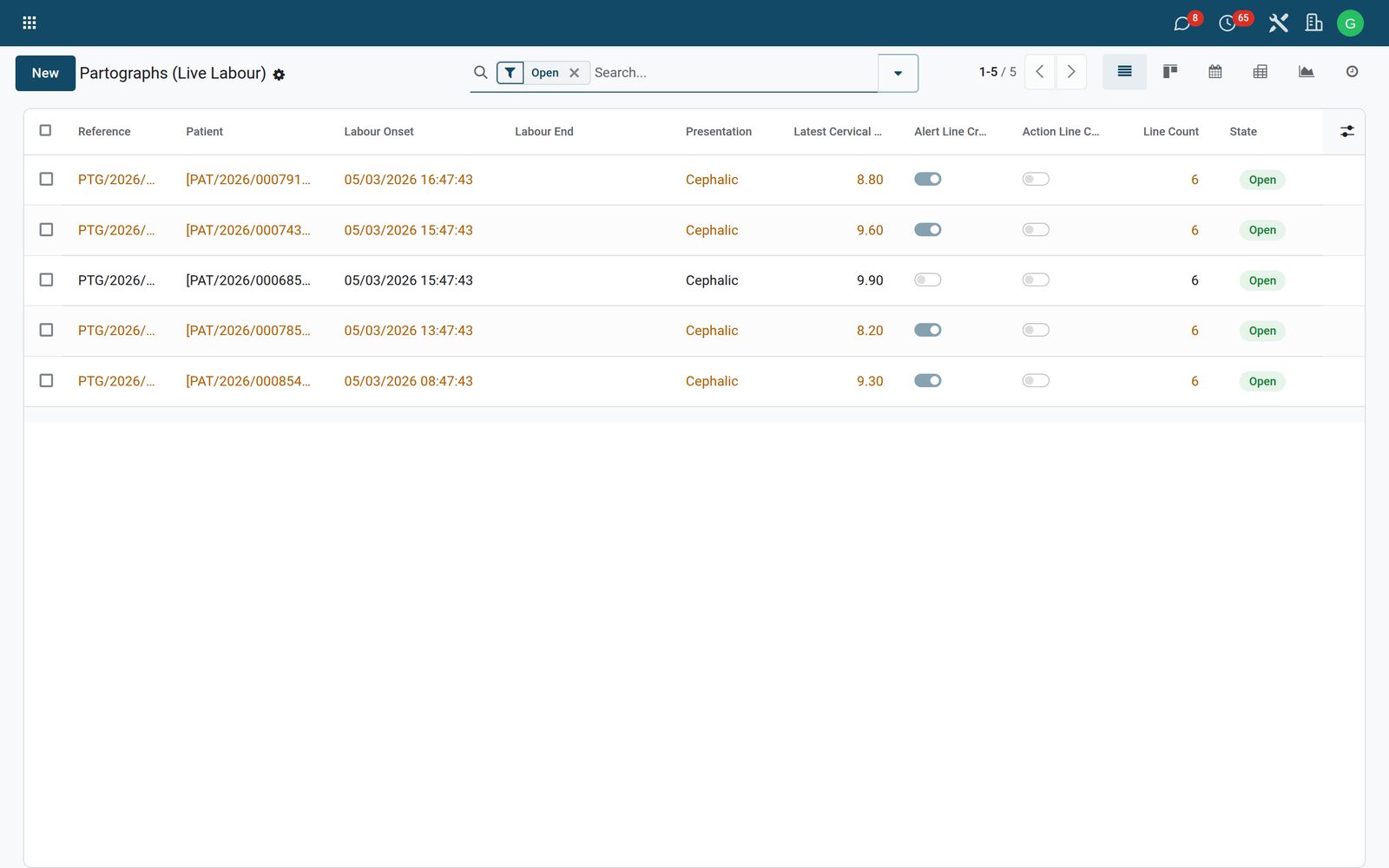
The partograph plots dilatation, descent, contractions and the foetal heart against the alert and action lines; deliveries record mode, blood loss and complications; every baby is registered with APGAR and weight.
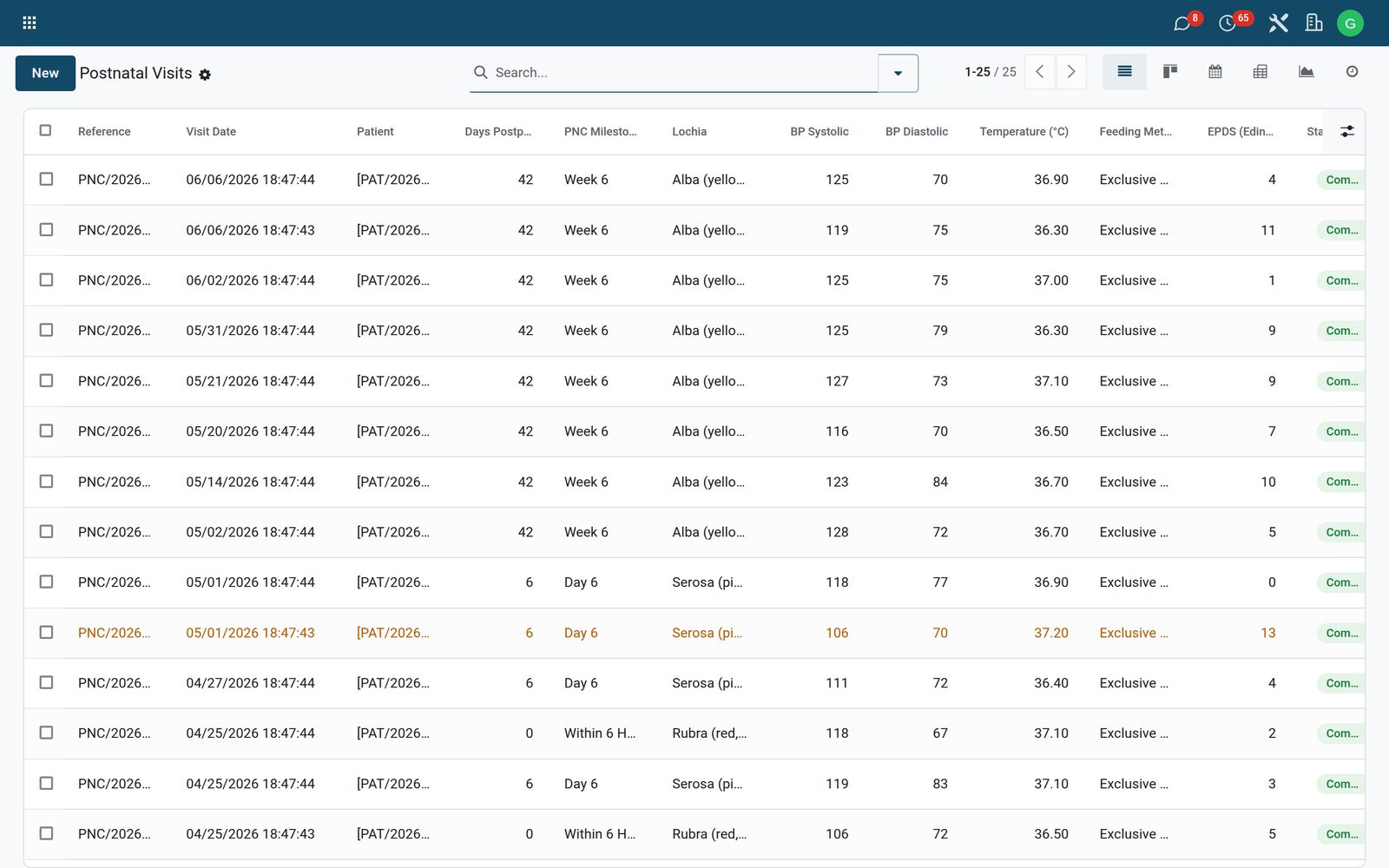
Postnatal visits for both, and postnatal follow-up of the mother at the intervals the guidelines set.
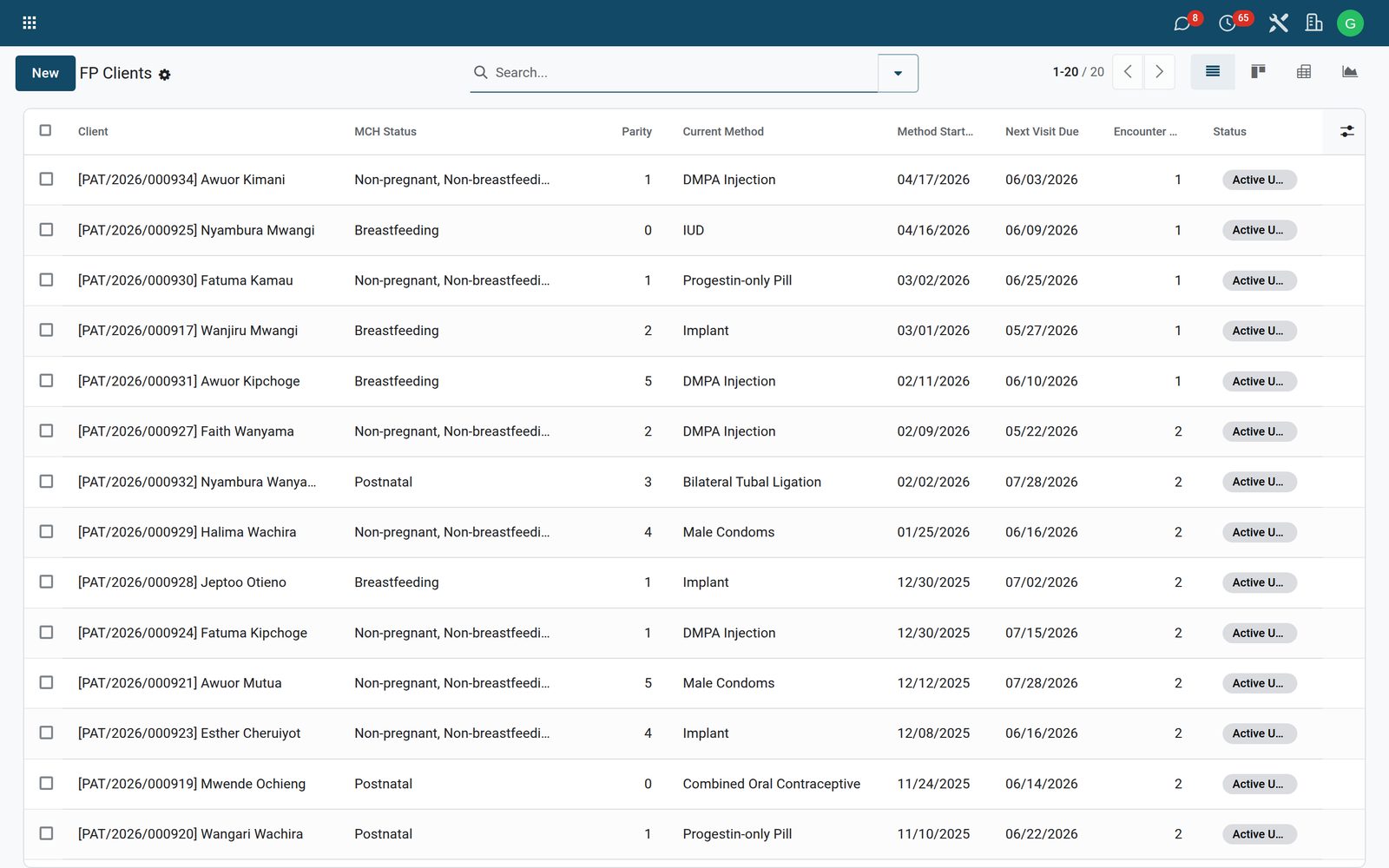
FP clients with their chosen method and encounters for every refill, switch or removal.
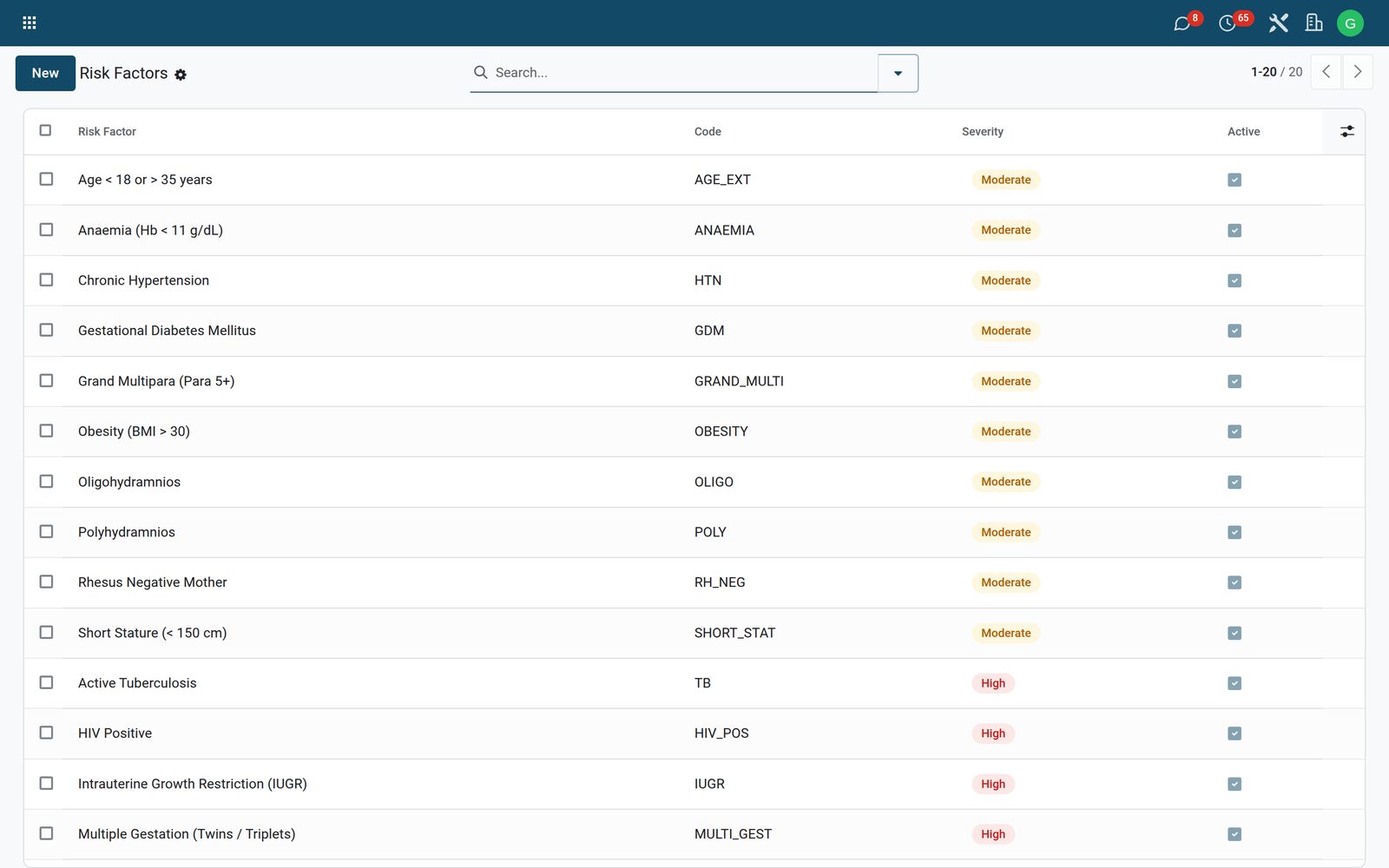
The obstetric risk factors and complications lists behind the pregnancy record.
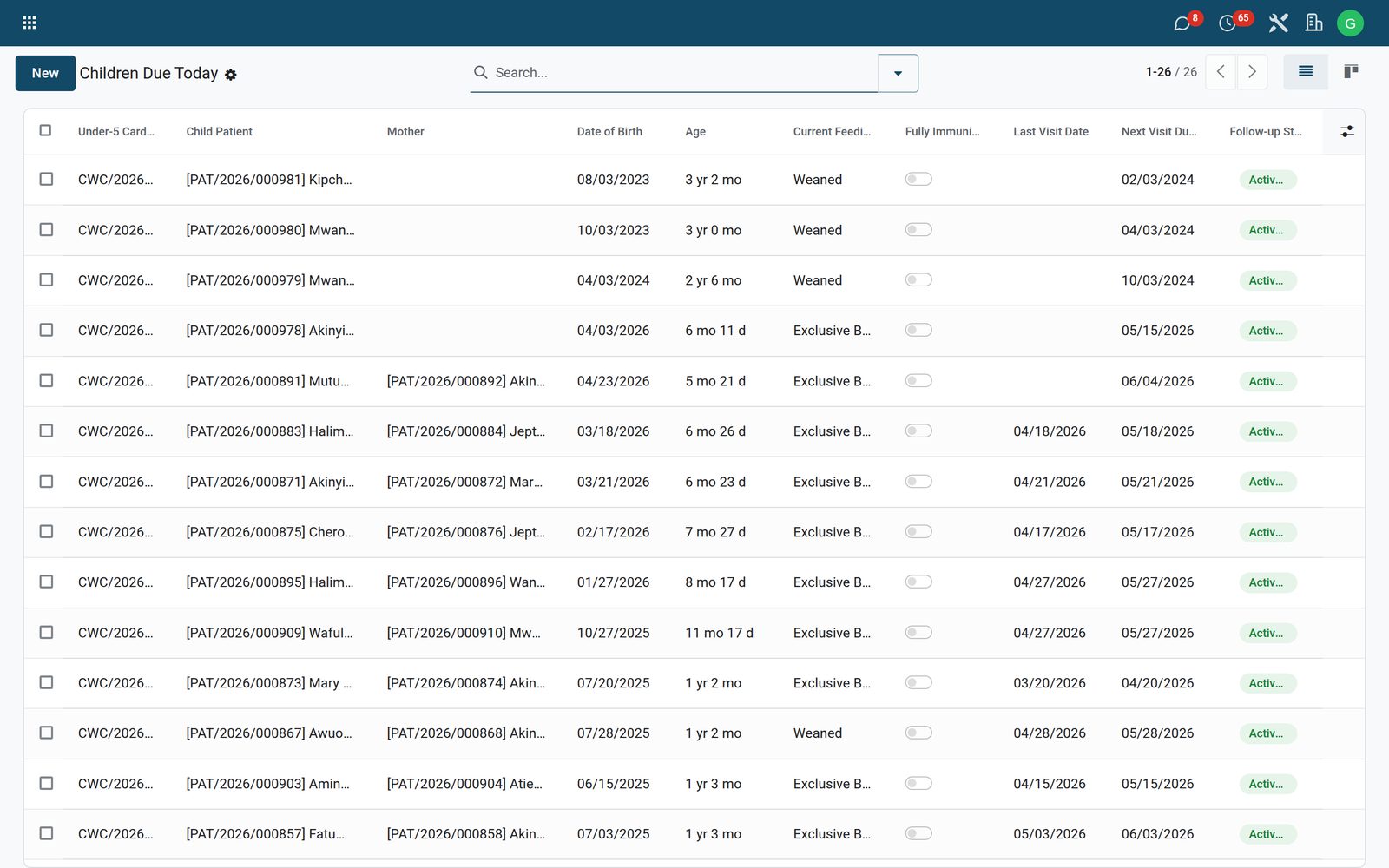
Children in the CWC, the visits due today and all CWC visits with weight, length and the next date.
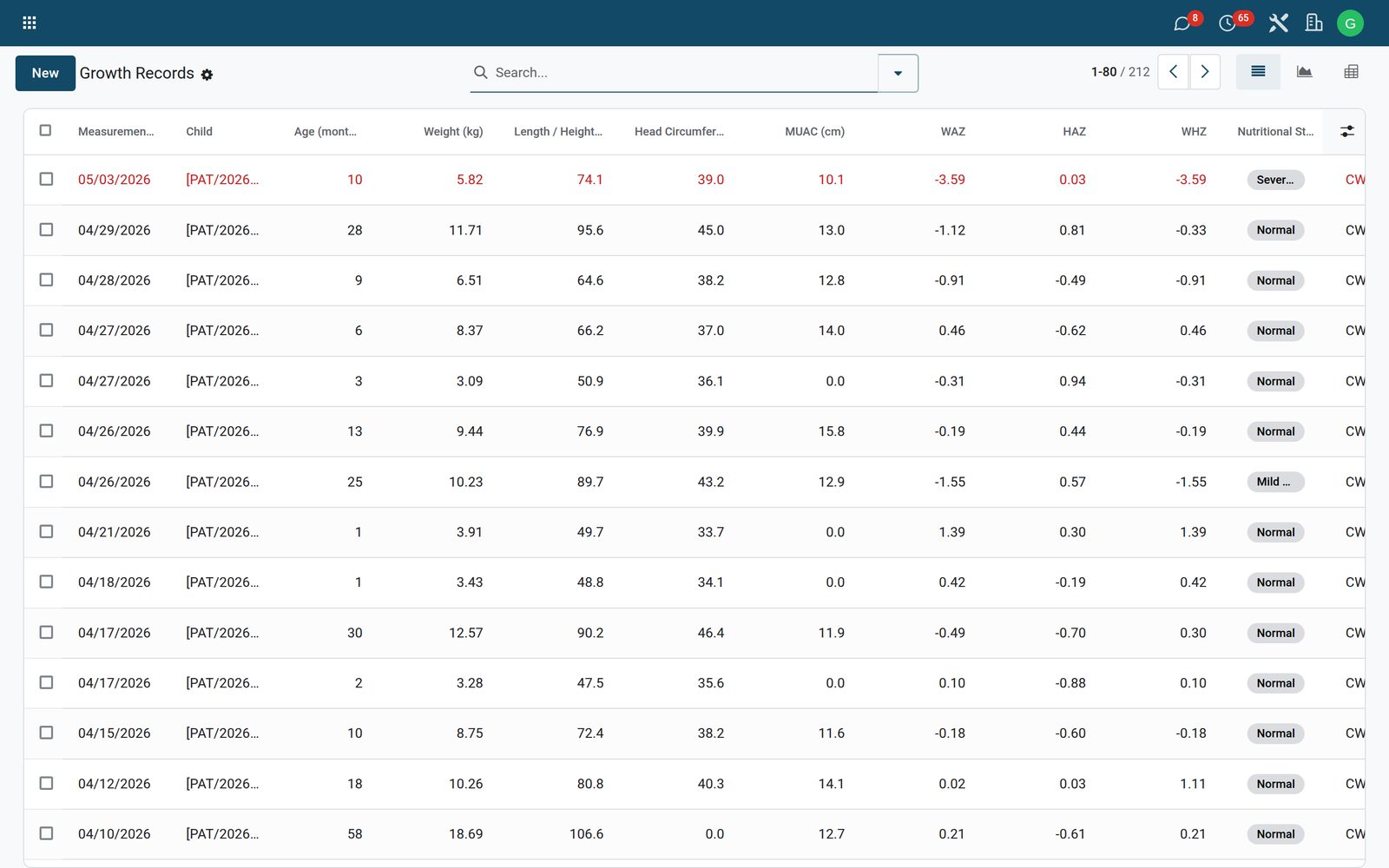
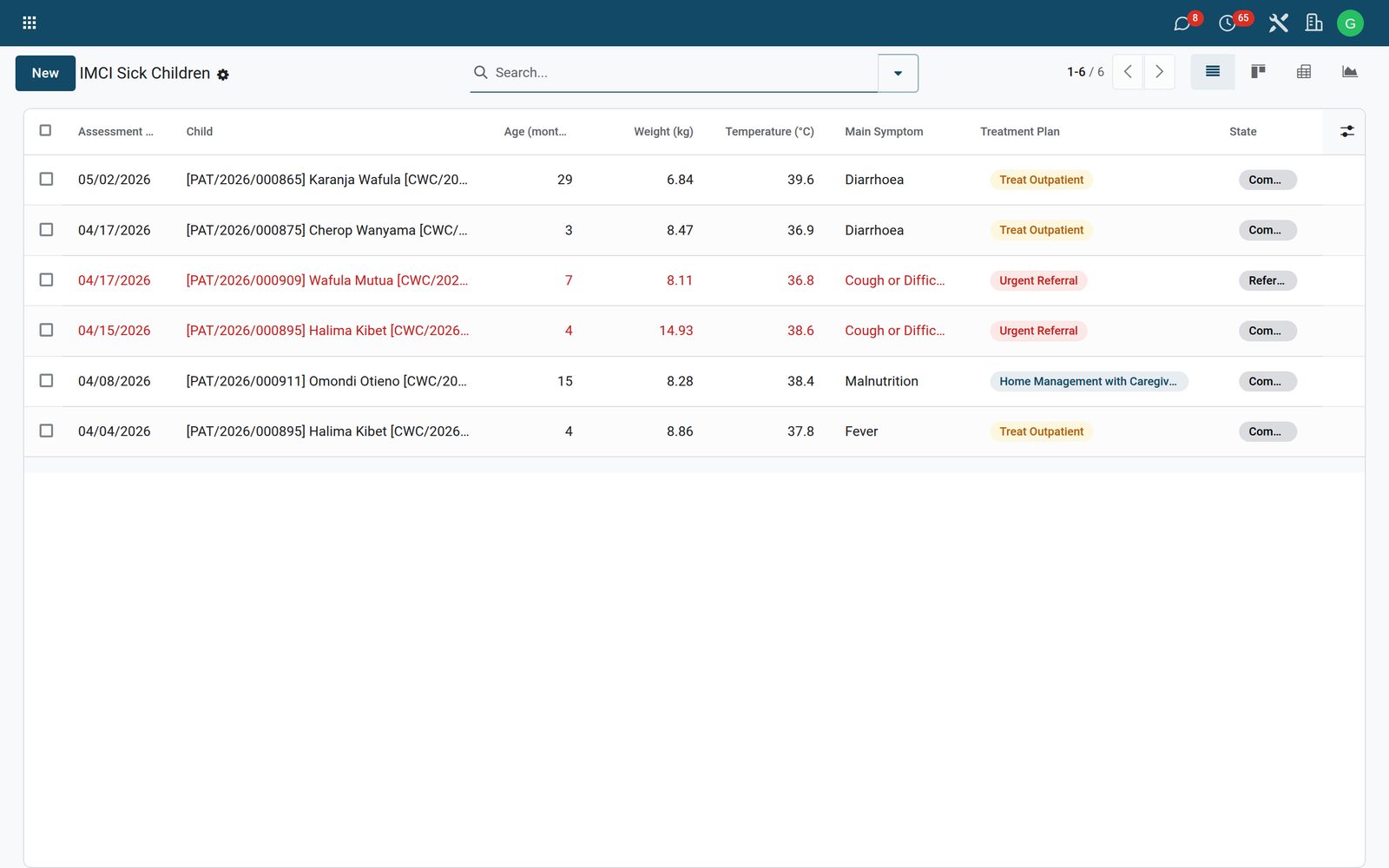
Today's CWC clinic, growth records plotted as WHO z-scores, and IMCI classification with danger signs and treatment.
The MoH 711 returns, and children, CWC visits, growth and IMCI in pivot and graph.
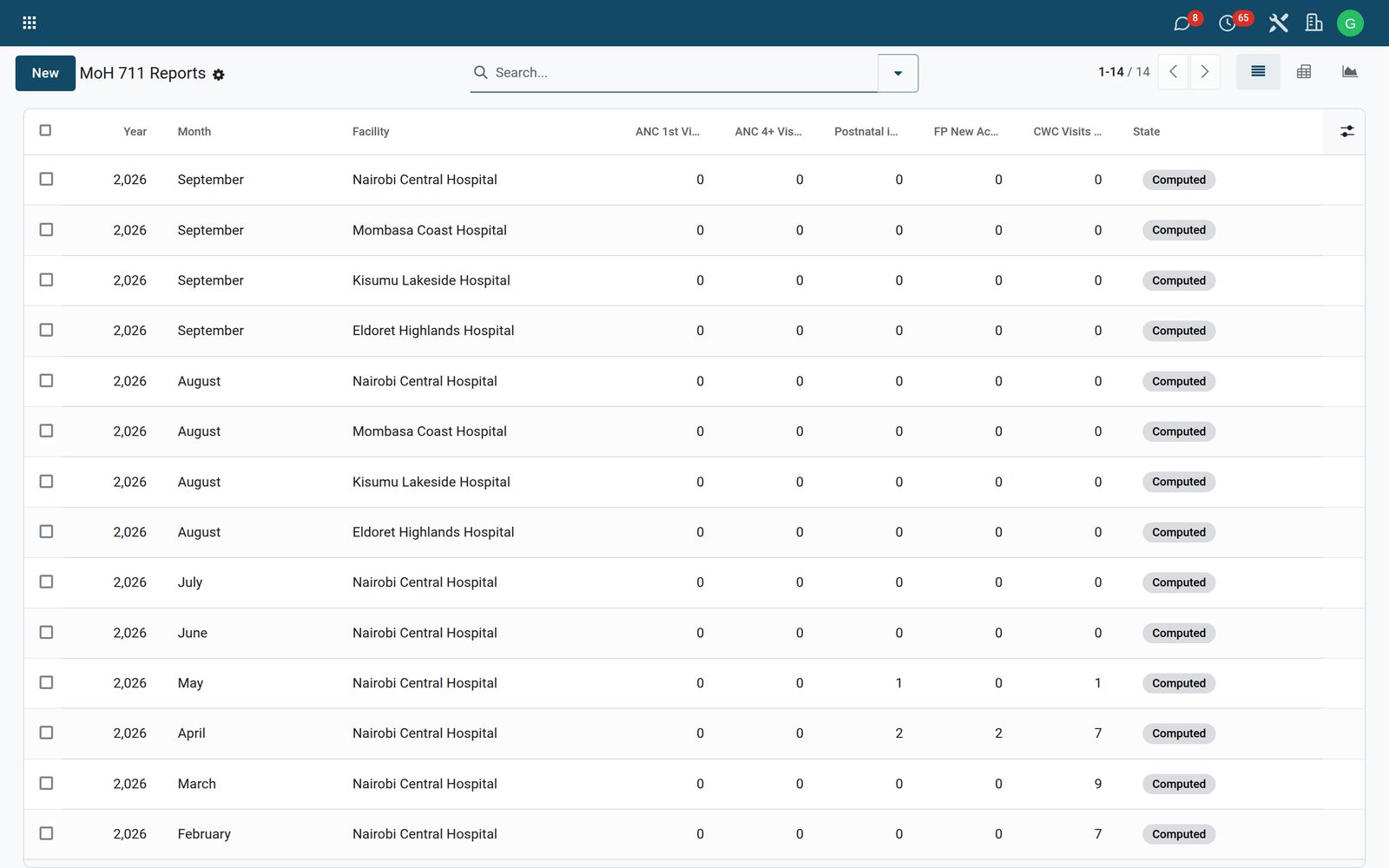
CWC milestones, IMCI danger signs and the WHO growth standards (LMS).
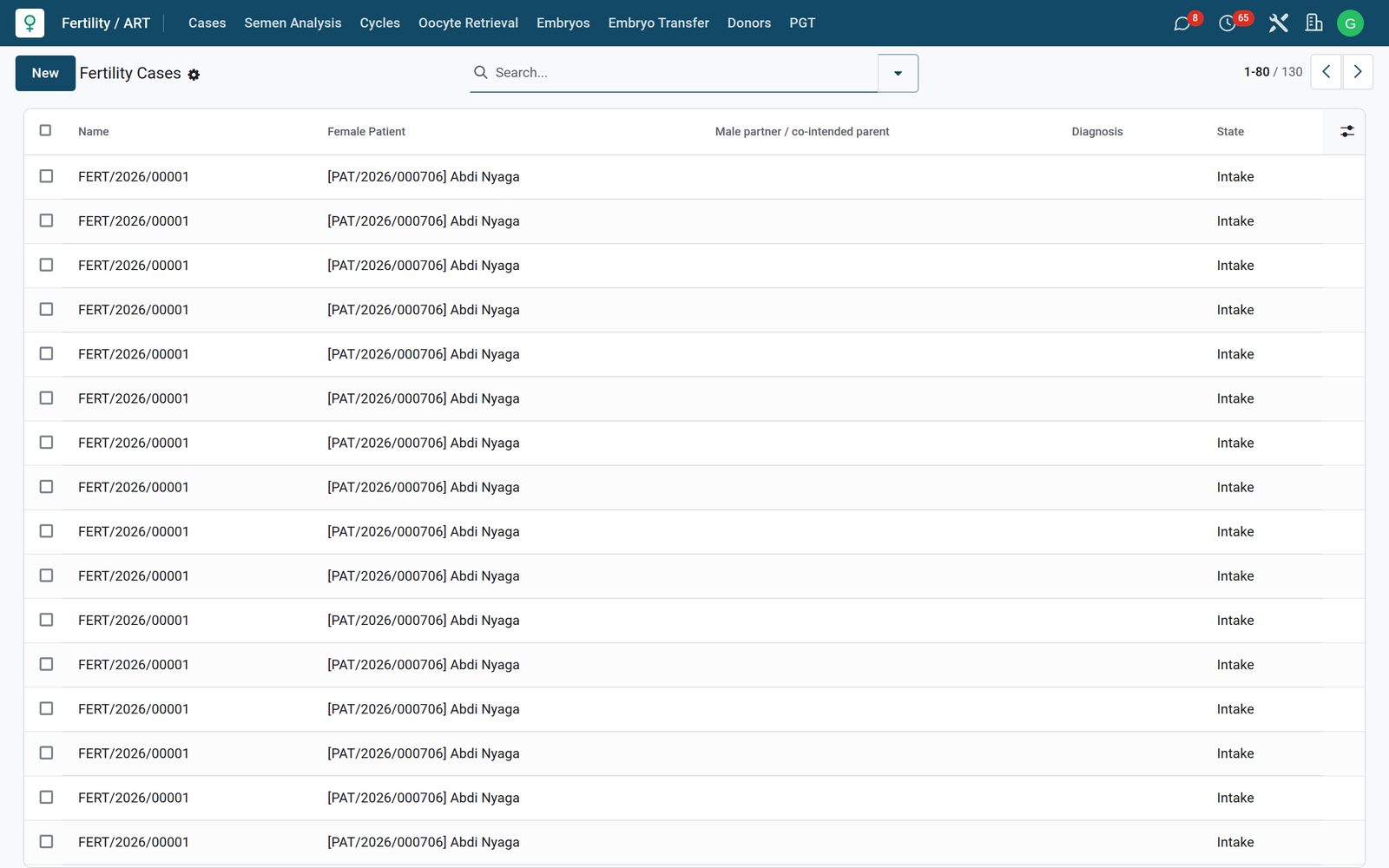
Fertility cases, donors, stimulation cycles, oocyte retrieval and embryo transfer on one couple's file.
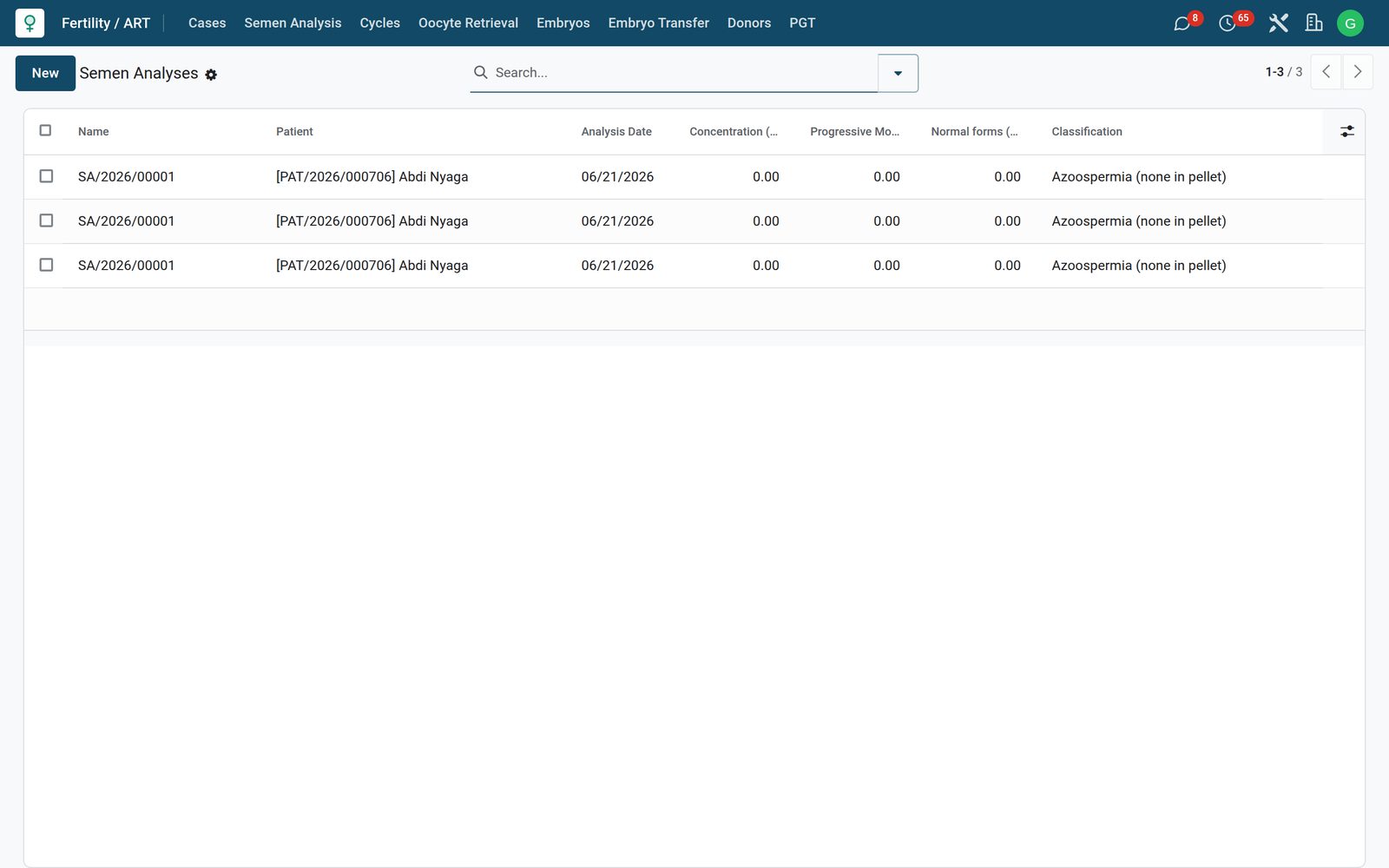
Semen analysis against WHO references, embryos graded day by day and PGT results.
What's inside
49 items in 9 areas, every one shipping with the app today.
Works with
Maternity shares one database with the rest of the Bridge HMS Suite and BridgeERP: these are the apps it already talks to, with nothing to buy in between.
Maternity needs these to run; they come with it in the same plan.
Any BridgeERP app can join the same database.
 AccountingFull double-entry accounting, bank reconciliation, assets, budgets and statutory reports.
 ExpensesEmployee expense claims with receipt capture and reimbursement.
 InvoicingCustomer invoices, vendor bills, payments and tax handling.
 SignSend documents for legally binding electronic signature.
 SubscriptionsRecurring contracts, automatic renewals and MRR reporting.
 EmployeesEmployee records, contracts, attendance, skills, appraisals and referrals.
In the suite
 HMS Core
 Reception
 Appointments
 Consultation / OPD
 Electronic Health Record
 Laboratory
 Pathology
 Radiology & PACS
 Pharmacy
 Billing & Cashiering
 Insurance & ClaimsWards & Inpatient
 Nursing
 Operating Theatre
 Intensive Care
 Emergency
 Blood Bank
 Dialysis
 Paediatrics
 Dental
 Ophthalmology
 Specialty Packs
 Telehealth
 Patient Portal
 Ambulance
 Mortuary
 Medical Stores
 Dietary
 CSSD
CSSD Infection Control
 Quality & Accreditation
 Health Analytics
 Bria Clinical AI
 Interoperability
 Public Health
 Country Compliance
 Biomedical Engineering
 Facility Helpdesk
 HousekeepingHospital HR
 Patient SMS & WhatsApp
 M-Pesa Payments
Add it to your Bridge HMS Suite plan, priced per practitioner, or start a free trial and see it running first.